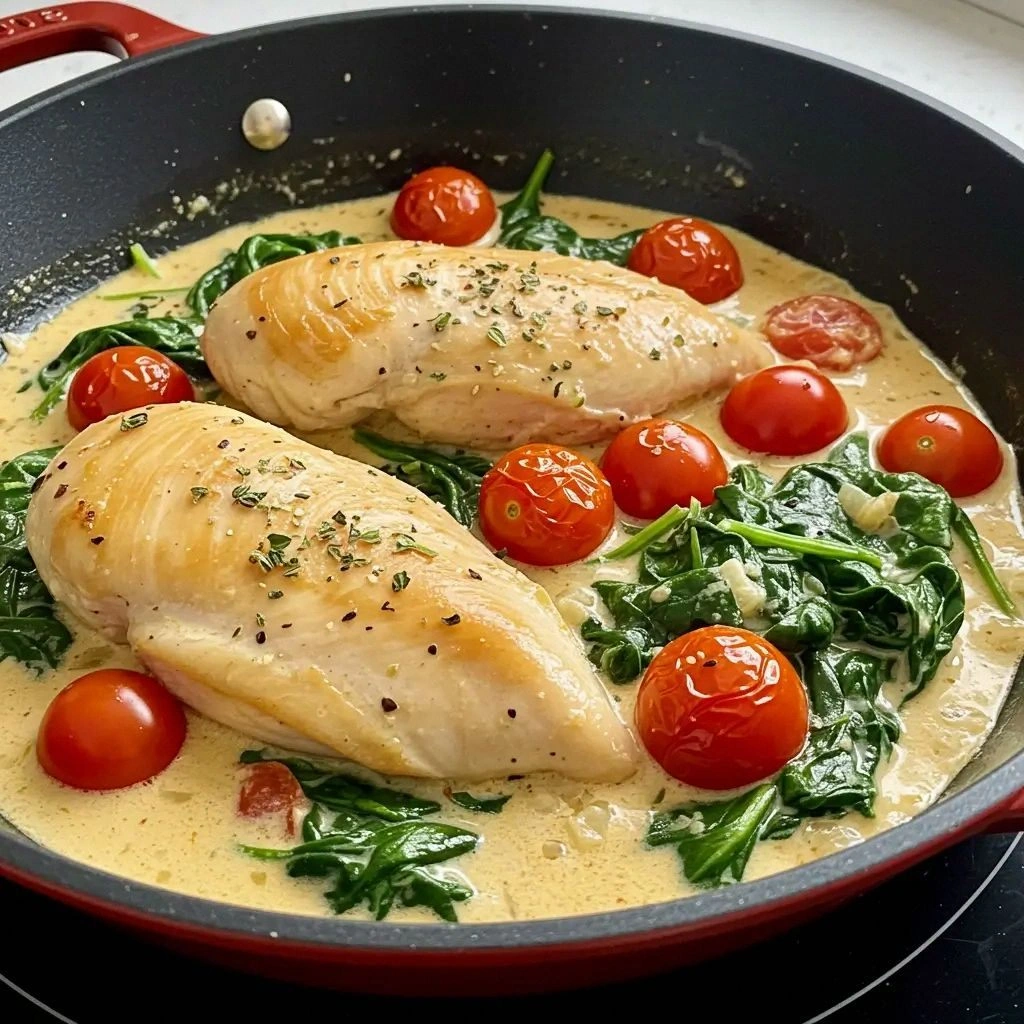
I was halfway through a week of bland, over‑seasoned chicken when the kitchen exploded in a symphony of sizzling garlic and a sudden, glorious pop of color from a handful of sun‑dried tomatoes. My friend dared me to turn that chaos into a showstopper, and I didn’t back down. The result? A dish that feels like a hug from Tuscany, but with the convenience of a Sunday dinner you can make in 45 minutes. The moment the pan hit the stove, the air filled with a buttery aroma that made the whole house smell like a Roman trattoria. The sight of golden‑brown chicken breasts, their edges crisping to a delicate crackle, was almost too beautiful to touch.
I’ve tried every “creamy Tuscan chicken” you can find on the internet, from the bland to the over‑cooked, and none have matched the harmony of textures and flavors in this version. The sauce is silky, almost velvet‑like, coating each bite with a rich blend of cream, Parmesan, and a splash of chicken broth that balances the saltiness of the sun‑dried tomatoes. The chicken stays tender, never dry, thanks to the precise timing that locks in moisture. The spinach, sautéed just until wilted, adds a pop of color and a subtle earthiness that lifts the dish. And the finishing touch of fresh basil? It’s the final flourish that turns the plate into a work of art.
What makes this version stand out is the attention to detail that turns a simple recipe into a culinary experience. I’ve distilled the process into a series of micro‑challenges that keep you engaged: I dare you to taste this and not go back for seconds. The sauce doesn’t just thicken; it sings. The chicken isn’t just cooked; it’s perfected. The whole dish feels like a well‑orchestrated symphony, each instrument—garlic, basil, Parmesan—playing its part to the finest degree.
If you’ve ever struggled with the dreaded “too‑heavy” cream sauce, you’re not alone. Most recipes get this completely wrong by adding all the dairy at once, resulting in a clumpy, unappetizing texture. Here, the trick is to introduce the cream gradually, letting the butter and Parmesan melt into a silky emulsion before the broth kicks in. That subtle layering of flavors is what makes the sauce sing. And when you finish with a squeeze of lemon juice, the acidity cuts through the richness, giving the dish a bright, refreshing finish that will have your guests asking for the recipe.
Picture yourself pulling this out of the oven, the whole kitchen smelling incredible, the steam rising in a cloud that looks almost like a Tuscan sunrise. The dish is ready to be plated, and you can’t help but feel a surge of pride. You’ve taken a humble chicken breast and turned it into a masterpiece that will impress even the most discerning palate. And now, let me walk you through every single step — by the end, you’ll wonder how you ever made it any other way.
What Makes This Version Stand Out
- Flavor: The combination of sun‑dried tomatoes, spinach, and Parmesan creates a depth that feels like a slow‑cooked sauce, yet it’s ready in minutes.
- Texture: The chicken remains moist and tender, thanks to a quick sear that locks in juices before the creamy sauce is added.
- Simplicity: Five main ingredients plus pantry staples mean you can whip this up on a weekday without a trip to the grocery store.
- Uniqueness: The subtle lemon finish and fresh basil garnish elevate the dish beyond the usual creamy chicken.
- Crowd Reaction: Friends rave about the sauce’s silky feel and the bright, herbaceous finish that keeps them coming back.
- Ingredient Quality: Using high‑quality Parmesan and real sun‑dried tomatoes makes a noticeable difference in flavor.
- Cooking Method: A single pan, no fuss, no mess—perfect for busy nights.
- Make‑Ahead Potential: The sauce can be reheated without losing its silky texture, making it ideal for meal prep.
Alright, let's break down exactly what goes into this masterpiece...
Inside the Ingredient List
The Flavor Base
Olive oil is the silent hero that carries the garlic and sun‑dried tomatoes to a golden stage. It provides a subtle fruity note that balances the richness of the cream. Skipping it would leave the sauce flat and the chicken dry. For an extra layer of depth, consider a splash of white wine during the sauté; it deglazes the pan and pulls up all those caramelized bits.
The Texture Crew
The chicken breasts are the star, but their texture depends on how you handle them. Pound them to an even thickness so they cook uniformly, preventing the outer layers from drying out while the inside remains raw. The butter in the sauce creates a glossy finish that makes every bite feel indulgent. If you’re watching calories, you can substitute half the butter with Greek yogurt, but the sauce will lose some of its silky sheen.
The Unexpected Star
Sun‑dried tomatoes are more than just a pop of color; they bring a concentrated sweetness that cuts through the cream’s richness. Look for those packed in olive oil for a more authentic flavor—if you only find sun‑dried tomatoes in oil, drain them lightly before adding to the pan. A pinch of red pepper flakes can add a subtle heat that makes the dish feel more dynamic. If you’re a fan of a tangy twist, a squeeze of lemon juice at the end will brighten everything.
The Final Flourish
Fresh basil and grated Parmesan are the final touches that turn a good dish into a great one. The basil adds a bright, herbaceous note that balances the richness, while the Parmesan contributes a nutty depth and a slightly gritty texture that contrasts the silky sauce. For a vegan version, replace the Parmesan with nutritional yeast and use coconut cream instead of heavy cream.
Everything's prepped? Good. Let's get into the real action...
The Method — Step by Step
- Heat a large skillet over medium‑high heat and add 2 tablespoons of olive oil. Once shimmering, add the seasoned chicken breasts and sear until golden brown on both sides, about 3-4 minutes per side. The edges should pull away from the pan and the internal temperature should reach 165°F. This is the moment of truth—don’t rush it or you’ll lose that perfect crust.
- Remove the chicken and set aside. In the same pan, add 2 tablespoons of butter and let it melt, then toss in 4 minced garlic cloves. Cook until fragrant, about 30 seconds, watching carefully so it doesn’t burn. This step builds the flavor base that will carry the sauce.
- Add 1 cup of chopped sun‑dried tomatoes to the pan and sauté for 2 minutes. The tomatoes will soften and release their oils, creating a fragrant bed for the cream. If you’re feeling adventurous, sprinkle a pinch of red pepper flakes for a hint of heat.
- Pour in 1 cup of heavy cream, then stir in 1/2 cup of grated Parmesan. The cheese will melt into the cream, creating a silky emulsion. Let the mixture simmer gently for 3-4 minutes until it thickens slightly. The sauce should coat the back of a spoon without being too runny.
- Add 1 cup of fresh spinach, stirring until it wilts. The spinach’s slight bitterness balances the richness of the sauce. Then return the chicken to the skillet, spooning some sauce over each piece. Let everything simmer together for an additional 3 minutes so the chicken can finish cooking while absorbing the flavors.
- Finish with a squeeze of lemon juice and a handful of chopped fresh basil. The acidity cuts through the cream, while the basil adds a fresh, aromatic layer. Taste and adjust seasoning with salt and pepper as needed.
- Plate the chicken on a warm dish, spooning the remaining sauce over the top. Garnish with extra Parmesan and basil if desired. Serve immediately with pasta, rice, or a side of crusty bread to soak up the sauce.
That's it — you did it. But hold on, I've got a few more tricks that'll take this to another level...
Insider Tricks for Flawless Results
The Temperature Rule Nobody Follows
Cooking the chicken at the right temperature is crucial. A medium‑high heat ensures a crisp exterior while the interior stays juicy. Too low, and the chicken will steam and lose its golden crust; too high, and it burns before the sauce thickens. Keep an eye on the pan, and adjust the heat as needed to maintain a steady sizzle.
Why Your Nose Knows Best
Smell the sauce as it simmers. When it starts to thicken and the garlic releases a sweet, nutty aroma, that’s your cue to add the spinach. Your nose can tell when the sauce has reached the right consistency, preventing over‑cooking and a dry finish.
The 5‑Minute Rest That Changes Everything
After removing the chicken from the skillet, let it rest for 5 minutes before slicing. This allows the juices to redistribute, keeping the meat moist and tender. A quick rest also lets the sauce thicken slightly, giving it a richer, more cohesive flavor.
Layering the Flavors
Instead of adding all the herbs at once, layer them. Add the basil at the end to preserve its bright, fresh taste. If you’re using dried herbs, sprinkle them early to allow their flavors to bloom, but finish with fresh herbs for a vibrant finish.
Balancing the Cream
If you prefer a lighter sauce, replace half the heavy cream with Greek yogurt. The yogurt adds tang and thickens the sauce without the same richness. However, be careful not to add the yogurt too early, as it can curdle if exposed to high heat.
Stirring Technique
Stir the sauce in a circular motion, not in a straight line. This technique helps prevent the cheese from clumping and ensures a smooth, even emulsion. Keep the heat low while you’re incorporating the cheese, allowing it to melt gradually.
Creative Twists and Variations
This recipe is a playground. Here are some of my favorite ways to switch things up:
Spicy Mediterranean
Add a tablespoon of chopped kalamata olives and a pinch of smoked paprika to the sauce. The olives give a briny depth, while the paprika adds a subtle smokiness that complements the sun‑dried tomatoes. This version pairs wonderfully with a side of couscous.
Cheesy Chicken Alfredo
Swap the Parmesan for a blend of mozzarella and Asiago for a milder, meltier sauce. Add a splash of white wine to the cream for a subtle acidity. Serve over fettuccine for a classic Alfredo twist.
Vegetarian Version
Replace the chicken with thick slices of eggplant, seared until golden. The eggplant absorbs the sauce beautifully, and the result is a hearty, plant‑based main that still feels indulgent. Top with a sprinkle of fresh parsley for a fresh finish.
Gluten‑Free Delight
Serve over spiralized zucchini noodles or cauliflower rice instead of pasta. The vegetables soak up the sauce while keeping the dish low‑carb. Add a handful of toasted pine nuts for crunch.
Herb‑Infused Variation
Add a handful of chopped rosemary and thyme to the pan when sautéing the garlic. The herbs infuse the sauce with a piney, earthy aroma that pairs well with the buttery base. Finish with fresh sage for an extra layer of flavor.
Breakfast Kick
Use sliced breakfast sausage instead of chicken for a savory, protein‑packed breakfast. Serve over scrambled eggs or a hearty hash for a comforting morning meal. The creamy sauce adds a luxurious touch to a simple breakfast.
Storing and Bringing It Back to Life
Fridge Storage
Cool the dish completely before transferring it to an airtight container. Store in the refrigerator for up to 3 days. The sauce will thicken as it cools, so when reheating, add a splash of milk or cream to restore its silky texture.
Freezer Friendly
Divide the dish into individual portions in freezer‑safe containers. Freeze for up to 2 months. When ready to eat, thaw overnight in the fridge and reheat gently on the stove, stirring in a little broth to keep the sauce from drying out.
Best Reheating Method
Reheat on low heat, stirring frequently until warm. Add a tiny splash of water or broth to create steam, which keeps the sauce moist and prevents it from separating. Serve immediately for the best texture.