I was standing in my kitchen, staring at a ruined batch of cheesecake that had turned into a soggy, lumpy disaster, when my friend texted me a challenge: “Make a passion fruit cheesecake that actually tastes good.” I laughed, but I was also secretly terrified—my last attempt had been a culinary crime scene, the crust half melted, the filling a sad, watery mess that tasted like regret. The moment I opened the fridge, the citrus scent of fresh passion fruit pulsed through the air, and I felt a spark of hope. I decided to rewrite the whole recipe, to create a version so smooth, so vibrant, that even my most skeptical friend would be begging for a second slice. That night, I pulled out a handful of ingredients, and I swear I could hear the future of cheesecake whispering: “I am coming, and I am delicious.”
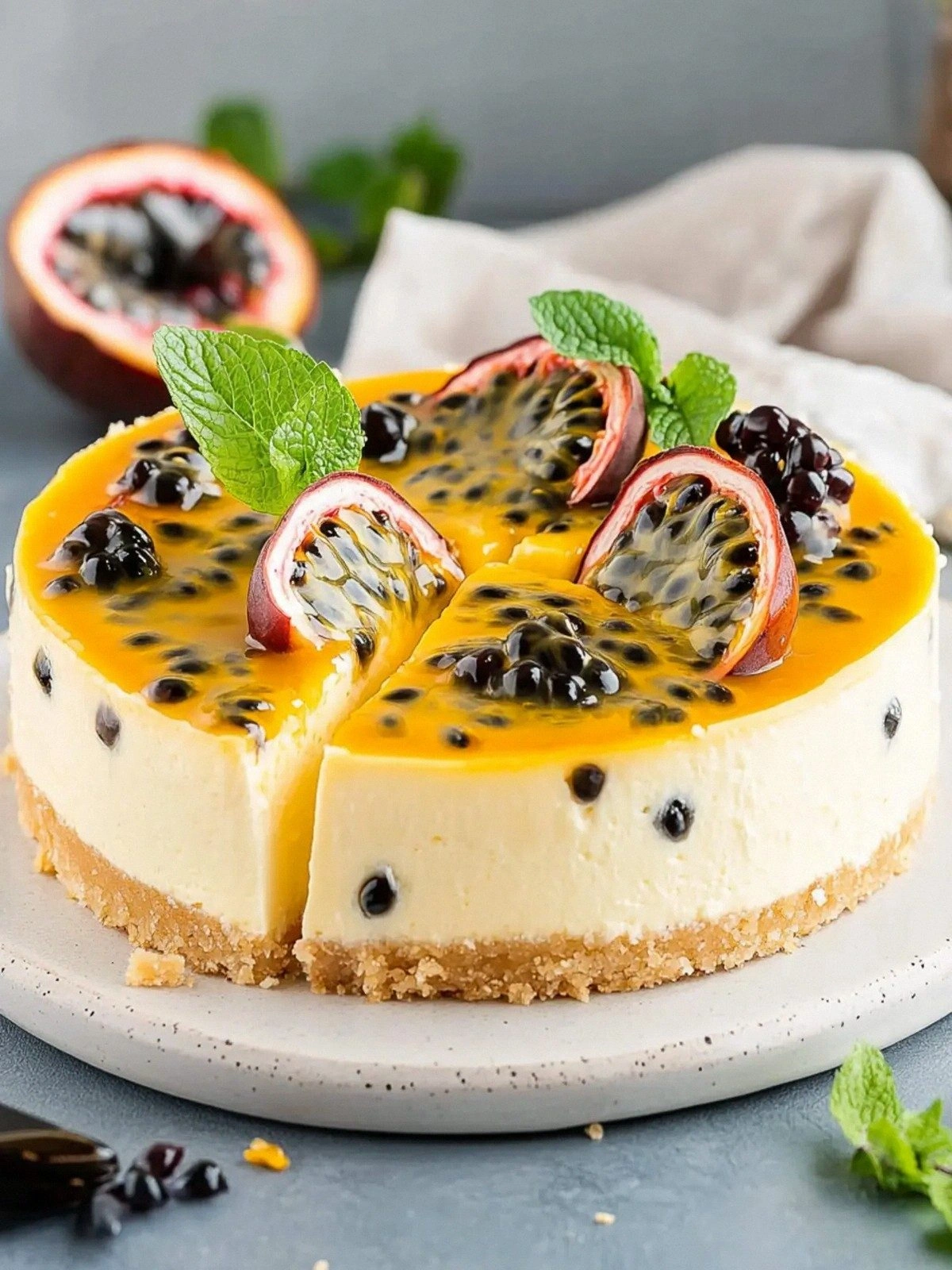
Picture this: a golden, buttery base that crackles slightly when you break into it, a filling that glistens with a glossy sheen of passion fruit, and a finish that melts in your mouth like a warm summer breeze. The aroma is a cocktail of sweet fruit, creamy richness, and a faint hint of citrus zest that makes your nose do a happy dance. The texture is silky, almost custard-like, with a subtle tang that cuts through the sweetness. And the best part? The entire thing comes together in less than an hour, so you can impress at a last-minute dinner or just indulge on a lazy Sunday. I dare you to taste this and not go back for seconds—trust me, it’s addictive.
What sets this version apart isn’t just the combination of passion fruit and cream cheese. It’s the way the ingredients interact, the subtle balance between sweet and tart, and the meticulous attention to detail that turns a simple dessert into an experience. The crust isn’t just a base; it’s a flavor foundation that supports the luscious filling. The filling is a carefully orchestrated marriage of cream cheese, sour cream, and passion fruit pulp, thickened with cornstarch to keep it firm yet airy. The result is a cheesecake that’s both indulgent and refreshing, a dessert that can be the centerpiece of any gathering or the quiet comfort after a long day.
And there’s a twist that most recipes forget: a splash of lemon juice. It’s the secret that brightens the fruit’s natural sweetness and gives the cheesecake a crisp, bright finish that lingers on the palate. This isn’t just another cheesecake; it’s a revelation. I’ll walk you through every single step, from the first crack of the biscuit base to the final swirl of passion fruit on top. By the end, you’ll wonder how you ever made it any other way.
What Makes This Version Stand Out
- Flavor Depth: The combination of cream cheese, sour cream, and passion fruit creates a layered taste profile that feels both creamy and tart, unlike the flat sweetness of most cheesecakes.
- Texture Perfection: The cornstarch thickener gives the filling a silky mouthfeel that sets it apart from the dense, heavy textures of traditional versions.
- Time Efficiency: The entire process takes under an hour, making it ideal for impromptu dessert needs.
- Visual Appeal: The glossy, jewel‑like finish of the passion fruit swirl turns the cheesecake into a showstopper.
- Ingredient Quality: Using fresh passion fruit pulp rather than canned preserves the authentic tropical flavor and vibrant color.
- Make‑Ahead Friendly: The cheesecake can be prepared a day ahead and chilled, allowing flavors to meld beautifully.
Alright, let’s break down exactly what goes into this masterpiece…
Inside the Ingredient List
The Flavor Base
The 200 grams of digestive biscuits form the backbone of this cheesecake. Their slightly sweet, buttery profile balances the tartness of the passion fruit. If you skip this step, you’ll end up with a flat, unstructured base that won’t hold the filling. A good rule of thumb is to use a slightly higher biscuit-to-butter ratio for a firmer crust, but keep the butter at 100 grams to avoid a greasy texture.
The Texture Crew
The 500 grams of cream cheese and 200 grams of sour cream combine to create a creamy, velvety filling. Cream cheese gives body and richness, while sour cream adds a subtle tang that lightens the overall sweetness. If you’re worried about the filling being too thick, add a splash of milk or heavy cream to loosen it slightly. The 20 grams of cornstarch is the secret agent that stabilizes the mixture, ensuring it sets properly without cracking.
The Unexpected Star
The 200 grams of passion fruit pulp are the star of the show, delivering an intense, tropical flavor that cuts through the richness. Passion fruit is packed with antioxidants and has a natural tartness that balances the sweetness from the sugars. If you can’t find fresh passion fruit, look for high‑quality frozen pulp; just thaw it completely before using. The 10 milliliters of lemon juice brightens the fruit’s flavor and prevents the pulp from oxidizing, keeping the cheesecake vibrant.
The Final Flourish
The 150 grams of caster sugar and the 50 grams of caster sugar (combined, 200 grams total) sweeten the filling just enough to complement the tart fruit. Caster sugar dissolves quickly, preventing graininess. The 3 eggs act as a binder, giving the cheesecake structure and a beautiful golden hue when baked. If you’re vegan, you can replace the eggs with a flaxseed mixture, but the texture will differ slightly.
Everything’s prepped? Good. Let’s get into the real action…
The Method — Step by Step
- Start by preheating your oven to 160 °C (320 °F). In a medium bowl, crush the digestive biscuits into fine crumbs using a rolling pin or a food processor. This crumbly texture ensures a smooth base. Set aside.
- Melt the 100 grams of butter in a small saucepan over low heat until it’s just liquid. Combine the melted butter with the biscuit crumbs and stir until the mixture is moist but not soggy. This mixture should feel like damp sand.
- Press the crumb mixture firmly into the bottom of a 23 cm springform pan. Use the back of a spoon to level the surface. Chill in the refrigerator for 10 minutes to set the crust. Kitchen Hack: For a crisper edge, sprinkle a few extra crumbs on top before chilling.
- In a large bowl, beat the 500 grams of cream cheese on medium speed until smooth and creamy. Add the 200 grams of sour cream, 200 grams of caster sugar, and the 3 eggs one at a time, ensuring each is fully incorporated before adding the next. The mixture should be silky and free of lumps.
- Sift the 20 grams of cornstarch over the mixture and whisk until fully dissolved. This step is crucial; a clumpy cornstarch will ruin the silky texture. Watch Out: If you add the cornstarch too early, it may not disperse properly, leading to a grainy filling.
- Fold in the 200 grams of passion fruit pulp and the 10 milliliters of lemon juice. The mixture should look glossy and slightly translucent. The lemon juice not only brightens the flavor but also acts as a natural preservative.
- Pour the filling over the chilled crust in the springform pan. Tap the pan gently on the counter to release any air bubbles. The batter should settle evenly across the crust.
- Place the pan in the preheated oven and bake for 45 minutes. The edges should be set, but the center will still wobble slightly. This is normal; the cheesecake will continue to set as it cools.
- After 45 minutes, turn off the oven and leave the cheesecake inside with the door slightly ajar for an additional 15 minutes. This gradual cooling prevents cracking. Remove the cheesecake and let it cool to room temperature on a wire rack.
- Once cooled, cover the cheesecake with plastic wrap and refrigerate for at least 4 hours, preferably overnight. The longer it chills, the more the flavors meld and the firmer the texture becomes. Kitchen Hack: If you want a deeper flavor, add a few drops of vanilla extract to the batter before baking.
That’s it—you did it. But hold on, I’ve got a few more tricks that will take this to another level. Keep reading, and let me show you how to elevate your cheesecake to the next tier of perfection.
Insider Tricks for Flawless Results
The Temperature Rule Nobody Follows
Baking at the right temperature is essential for a smooth finish. A lower temperature (160 °C) allows the cheesecake to cook evenly without the top browning too quickly. I’ve found that a slight temperature dip—around 150 °C—can reduce the risk of cracks, especially if you’re using a larger pan. Keep an eye on the edges; they should set before the center.
Why Your Nose Knows Best
Smell is your best judge of doneness. When the cheesecake is ready, it should emit a warm, sweet aroma with a hint of citrus. If the scent feels too bland, it’s probably underbaked. If it smells overly sweet or burnt, you’re overcooking. Trust your nose—it’s the unsung hero of baking.
The 5-Minute Rest That Changes Everything
After baking, leave the cheesecake in the oven for 15 minutes with the door ajar. This slow cooling step is crucial for preventing cracks. The residual heat allows the filling to set gradually. I’ve seen many people skip this, only to find their cheesecake split into uneven layers.
The Secret of the Crust
A buttery crust not only adds flavor but also creates a barrier that prevents the filling from sticking to the pan. If you’re using a non-stick springform, you can still apply a thin layer of butter to the pan before adding the crumbs. This extra step can save you from a messy cleanup.
The Finish Line: A Passion Fruit Swirl
Just before serving, drizzle a little extra passion fruit pulp over the top and swirl with a toothpick. This creates a marbled effect that’s as beautiful as it is flavorful. The swirl also adds a burst of fresh fruit flavor that cuts through the richness of the cheesecake.
Creative Twists and Variations
This recipe is a playground. Here are some of my favorite ways to switch things up:
Tropical Mango Madness
Swap half the passion fruit pulp for fresh mango puree. The result is a creamy, tropical cheesecake with a sweet, stone‑fruit undertone that pairs beautifully with coconut flakes on top. This version is perfect for summer parties.
Dark Chocolate Drizzle
After the cheesecake has chilled, drizzle melted dark chocolate over the top. The bittersweet chocolate contrasts the tropical fruit, creating a layered flavor profile that’s both rich and refreshing. Sprinkle a pinch of sea salt to enhance the chocolate’s depth.
Coffee‑Infused Delight
Add a tablespoon of instant espresso powder to the batter before baking. The subtle coffee notes elevate the cheesecake’s complexity and pair wonderfully with a dusting of cocoa powder. This variation is ideal for coffee lovers looking for a dessert with a kick.
Almond Crunch Layer
Top the cheesecake with a layer of toasted almond slivers before chilling. The crunch adds a delightful textural contrast, and the nutty flavor complements the fruit’s brightness. You can also sprinkle a little almond extract into the batter for an extra almond aroma.
Berry Burst Variation
Incorporate a cup of mixed berries (blueberries, strawberries, raspberries) into the filling. The berries add color, texture, and a burst of natural sweetness that balances the tartness of the passion fruit. Serve with a berry compote for a truly indulgent dessert.
Storing and Bringing It Back to Life
Fridge Storage
Store the cheesecake in an airtight container in the refrigerator for up to 5 days. The cool environment keeps the creaminess intact while the flavors continue to meld. When you’re ready to serve, let the cheesecake sit at room temperature for 15 minutes to soften slightly.
Freezer Friendly
If you need to store the cheesecake longer, wrap it tightly in plastic wrap and then in aluminum foil before freezing. It can stay in the freezer for up to 3 months. When you’re ready to enjoy, thaw it in the refrigerator overnight. This method preserves the texture and prevents freezer burn.
Best Reheating Method
To reheat, place the cheesecake in a preheated oven at 80 °C (176 °F) for 10–12 minutes. This gentle warming keeps the cheesecake from drying out. Afterward, let it cool for a few minutes before serving. Add a tiny splash of water before reheating if you notice the top drying; it steams back to perfection.