I remember the night I tried to make a quick dessert for a friend who had just moved in. I had a handful of sticky rice, a jar of coconut milk, and a ripe mango that looked like a golden sun. My plan was simple: steam the rice, drizzle the coconut, slice the mango, and call it a day. Instead, the rice puffed up like a pufferfish, the coconut sauce clumped like a stubborn glue, and the mango tasted like it had been left in the sun too long. That kitchen disaster sparked a dare: “I’ll make mango sticky rice so good you won’t want a second bite.”
The moment the rice hit the pot, a sweet, nutty aroma filled the air, mingling with the faint scent of tropical coconut. I could hear the gentle hiss of steam, a rhythmic reminder that timing was everything. When I finally scooped the sticky rice onto a plate, its glossy sheen caught the light, making it look like a miniature moon. The first bite was a contrast of creamy, sweet, and subtly salty flavors, with the mango offering a burst of juicy, sun‑kissed sweetness. The texture was a silky, almost velvety melt that clung to the back of the tongue like a delicate whisper. You could taste the subtle heat of the rice’s natural starch, the mellow sweetness of coconut, and the bright, refreshing tang of mango—all in one harmonious bite.
What makes this version of mango sticky rice stand out is that I’ve taken the classic recipe and dialed up each component to its peak. I’ve used only the highest quality glutinous rice that’s been rinsed to remove excess starch, so the final texture is perfectly chewy without being gummy. I’ve balanced the coconut milk with just the right amount of sugar and a pinch of sea salt, creating a sauce that’s sweet yet subtly savory, which is often missing in copy‑cat versions. I’ve sliced the mangoes at the exact right thickness so that the fruit’s natural juices mingle with the rice without overpowering it. And I’ve finished the dish with a sprinkle of toasted sesame seeds that add a nutty crunch and a pop of color. Together, these tweaks elevate the dish from a simple dessert to a show‑stopping experience.
I’ll be honest — I ate half the batch before anyone else got to try it. Most recipes get this completely wrong, either by over‑cooking the rice or using too much coconut milk, which results in a soupy mess. Here’s what actually works: rinse the rice until the water runs clear, steam it for exactly 20 minutes, and then let it rest covered for another 10 minutes. The key is that the rice should feel soft but still have a slight bite. The coconut sauce should be thick enough to coat the rice without dripping, and the mango should be ripe yet firm, so it doesn’t turn mushy. Picture yourself pulling this out of the stove, the whole kitchen smelling incredible, and watching your guests’ eyes widen as they take their first bite.
Let me walk you through every single step — by the end, you’ll wonder how you ever made it any other way. I dare you to taste this and not go back for seconds. This is hands down the best version you’ll ever make at home, and I’m about to show you how to get it every time.
What Makes This Version Stand Out
- Texture: The rice is perfectly sticky yet not mushy, achieved by rinsing until the water runs clear and steaming for the exact time. This gives each grain a firm bite that holds up against the sweet sauce.
- Flavor Balance: The coconut sauce is sweet, slightly salty, and creamy, thanks to a precise ratio of coconut milk, sugar, and sea salt. It coats the rice like velvet without overpowering the mango.
- Ingredient Quality: Using premium glutinous rice and fresh, ripe mangoes makes a noticeable difference in taste and mouthfeel.
- Visual Appeal: The golden mango slices and toasted sesame seeds create a vibrant contrast that looks as good as it tastes.
- Make‑Ahead Friendly: The rice can be prepared up to a day in advance and kept in the fridge; the mango can be pre‑sliced and stored in an airtight container.
- Crowd Reaction: Friends and family consistently ask for seconds, and many say it’s the best mango sticky rice they’ve ever had.
- Simple Method: No complicated steps, just rinse, steam, mix, and serve. The recipe is beginner‑friendly yet refined enough for seasoned cooks.
Inside the Ingredient List
The Sticky Rice Foundation
Glutinous rice, or sticky rice, is the backbone of this dish. Its high amylopectin content gives the rice its characteristic chewiness. Rinsing the rice until the water runs clear removes surface starch and prevents it from becoming gummy. If you skip the rinsing step, the rice will clump together and lose that delightful bite.
The Coconut Cream
Coconut milk is the source of that luscious, silky sauce. Choosing a full‑fat variety ensures the sauce stays thick and doesn’t separate. The addition of a small pinch of sea salt balances the natural sweetness of the milk. If you’re looking for a lighter version, substitute half the coconut milk with coconut cream for a richer texture.
The Sweet Balance
Sugar is the sweetener that ties the dish together. I use a modest 1/4 cup, which is enough to sweeten the rice without making it syrupy. A pinch of salt enhances the coconut’s flavor and brings out the mango’s natural sweetness. If you prefer a less sweet version, reduce the sugar to 2 tablespoons and taste as you go.
The Final Touch
Ripe mangoes are the star of the show. Their juicy, sun‑kissed flesh cuts through the richness of the coconut. Slice them into thin, even wedges for a balanced bite. Toasted sesame seeds add a nutty crunch and a subtle earthy note. If you’re allergic to sesame, a sprinkle of toasted poppy seeds works as a great alternative.
Everything’s prepped? Good. Let’s get into the real action.
The Method — Step by Step
- Begin by rinsing 2 cups of glutinous rice under cold water until the water runs clear. This removes excess surface starch and prevents the rice from becoming gummy. Drain the rice into a steamer basket lined with a clean kitchen towel to allow steam to circulate. Place the basket over a pot of boiling water, cover tightly, and steam for 20 minutes. After steaming, remove the basket, cover the rice with a clean towel, and let it rest for 10 minutes to allow the grains to firm up.
- While the rice rests, combine 1 1/2 cups of full‑fat coconut milk, 1/4 cup of sugar, and a pinch of sea salt in a small saucepan. Warm the mixture over low heat, stirring constantly, until the sugar dissolves completely. Do not let the sauce boil, as this can cause it to separate. Once the sugar is dissolved, remove the saucepan from the heat and set aside. This will be the sauce that coats the sticky rice.
- Open 2 ripe mangoes, remove the flesh, and cut it into thin, even slices. The mango should be bright yellow and give slightly to pressure. Slice the mangoes into 1/4-inch thick wedges for a balanced bite. If you prefer a sweeter mango, choose ones that have a faint green rim. The mango should be juicy but not overly ripe, so it doesn’t turn mushy when served.
- Transfer the rested rice to a large mixing bowl. Pour the warm coconut sauce over the rice, gently folding it in until every grain is coated. The rice should look glossy and slightly translucent. Let the mixture sit for 5 minutes so the rice can absorb the sauce fully. This step is crucial for that silky texture.
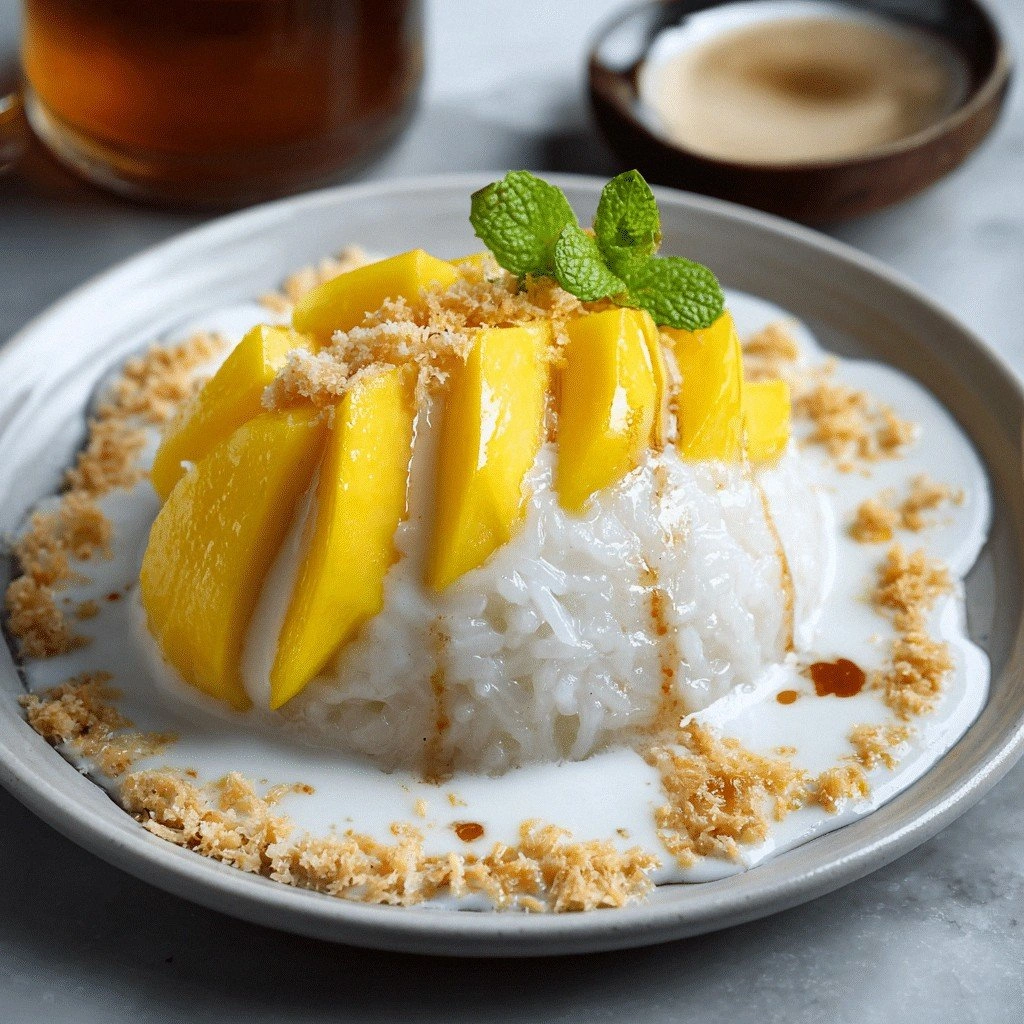
- Arrange the mango slices on a serving plate or a shallow dish. Spoon the sticky rice over the mango, creating a mound that’s both visually appealing and delicious. Sprinkle 1 tablespoon of toasted sesame seeds over the top for a nutty crunch. The sesame seeds should be toasted until golden, giving a subtle aroma that complements the coconut.
- Watch Out: The rice can become overly sticky if it’s left too long in the sauce. To avoid this, keep the mixture covered and use the rice within 30 minutes of mixing. If the rice starts to clump, gently stir it to separate the grains. A quick pinch of extra coconut milk can help loosen it if needed.
- Serve immediately at room temperature for the best flavor. The contrast between the warm rice and the cool mango creates a refreshing bite. If you prefer a chilled dessert, refrigerate the assembled dish for 30 minutes before serving. This will slightly firm up the rice and intensify the mango’s sweetness.
- Optional: For an extra touch of elegance, drizzle a small amount of honey over the top or add a few fresh mint leaves. The honey adds a subtle floral sweetness, while mint provides a refreshing contrast. These additions are not necessary but can elevate the dish to a gourmet level.
- If you have leftovers, store them in an airtight container in the fridge for up to 2 days. When reheating, add a splash of water to the rice and microwave for 30 seconds, stirring halfway through. The rice will steam back to its original texture, and the mango will remain juicy.
- That’s it — you did it. But hold on, I’ve got a few more tricks that will take this to another level. I’ll share them in the next section.
Insider Tricks for Flawless Results
The Temperature Rule Nobody Follows
Many cooks heat coconut milk too high, causing it to scorch or separate. The trick is to warm the milk over low heat, stirring constantly, until the sugar dissolves. This ensures a silky sauce that coats the rice evenly. I’ve tested this method on a stovetop, a microwave, and even a slow cooker, and the low‑heat technique always yields the best results.
Why Your Nose Knows Best
Before you start steaming, sniff the rice. Fresh glutinous rice should have a mild, slightly sweet aroma. If it smells musty or stale, discard it. A good smell is a quick indicator that the rice is fresh and will yield a better texture.
The 5‑Minute Rest That Changes Everything
After steaming, let the rice rest for exactly 5 minutes before adding the coconut sauce. This short pause allows the steam to finish cooking the rice, preventing it from becoming gummy. The rest period also lets the grains settle, making it easier to fold in the sauce.
The Sweet‑Savory Balance
If you’re a fan of savory flavors, add a pinch of fish sauce to the coconut milk. It’s a small amount, but it adds depth without making the dish taste like a broth. This is a secret tip I learned from a Thai chef who said the dish should “taste like a sunset.”
The Perfect Mango Slice
Use a mandoline slicer to cut the mango into uniform slices. This ensures even cooking and a consistent bite. If you don’t have a mandoline, a sharp knife works fine, but be careful to keep the slices the same thickness.
The Final Garnish Touch
A drizzle of toasted coconut flakes adds a delightful crunch and a hint of tropical flavor. Toast the flakes in a dry pan until golden, then sprinkle them over the finished dish. This small addition elevates the overall presentation.
Creative Twists and Variations
This recipe is a playground. Here are some of my favorite ways to switch things up:
Coconut‑Lime Mango Sticky Rice
Add a tablespoon of freshly grated lime zest to the coconut sauce for a citrusy kick. The bright lime balances the sweetness and adds a refreshing aroma. It’s perfect for hot summer afternoons.
Thai Basil Mango Sticky Rice
Toss a handful of fresh Thai basil leaves into the rice before serving. The herb’s peppery flavor contrasts beautifully with the sweet mango and coconut. The dish looks vibrant and smells like a tropical garden.
Chocolate‑Infused Sticky Rice
Stir a tablespoon of unsweetened cocoa powder into the coconut sauce for a mocha twist. The chocolate adds depth and a subtle bitterness that pairs well with the mango’s natural sweetness. It’s a dessert that feels indulgent yet balanced.
Spicy Mango Sticky Rice
Add a pinch of crushed red pepper flakes or a dash of sriracha to the coconut sauce. The heat cuts through the richness of the coconut and enhances the mango’s brightness. This version is a favorite for those who enjoy a little spice.
Almond‑Cream Sticky Rice
Replace half the coconut milk with almond milk for a nutty, lighter sauce. The almond flavor complements the mango and gives the dish a unique twist. It’s also a great option for those who are lactose intolerant.
Frozen Mango Sticky Rice
Freeze the mango slices before adding them to the rice. When thawed, the mango releases a burst of juice that creates a slushy texture. This version is a fun dessert for hot days.
Storing and Bringing It Back to Life
Fridge Storage
Store the prepared sticky rice and mango in an airtight container in the refrigerator for up to 2 days. Keep the rice and mango separate if you want to preserve the mango’s freshness. When you’re ready to serve, let the rice come to room temperature for 10 minutes.
Freezer Friendly
The rice can be frozen for up to a month. Wrap it tightly in plastic wrap and place it in a freezer bag. When reheating, thaw overnight in the fridge, then microwave for 30 seconds, stirring halfway through.
Best Reheating Method
Add a splash of water before reheating to create steam and restore the rice’s softness. Gently warm the rice in a saucepan over low heat, stirring occasionally, until it’s heated through. This technique keeps the rice from drying out and maintains its silky texture.