Last Tuesday at 7:03 p.m. I stood in my kitchen, rain drumming on the skylight, staring at a half-eaten rotisserie chicken and a can of pineapple chunks I’d bought for a smoothie I never made. My original plan—some ambitious coconut-lime curry—had imploded when I realized the coconut milk had expired in 2019. In desperation I grabbed a roll of foil like it was a life raft, flung those sad ingredients together with a glug of teriyaki, and prayed. Ten minutes later the apartment smelled like a Hawaiian street market; twenty minutes after that I was standing over the sink, tearing open steaming foil packets with my teeth because I couldn’t find scissors. I ate three portions straight from the shiny silver pouches, burned my tongue, and still went back for a fourth. That’s when I knew I had to reverse-engineer the madness and share it—because if foil, chicken, and pantry fruit can make a grown woman dance barefoot on cold tile, imagine what it’ll do for you on a night you actually planned dinner.
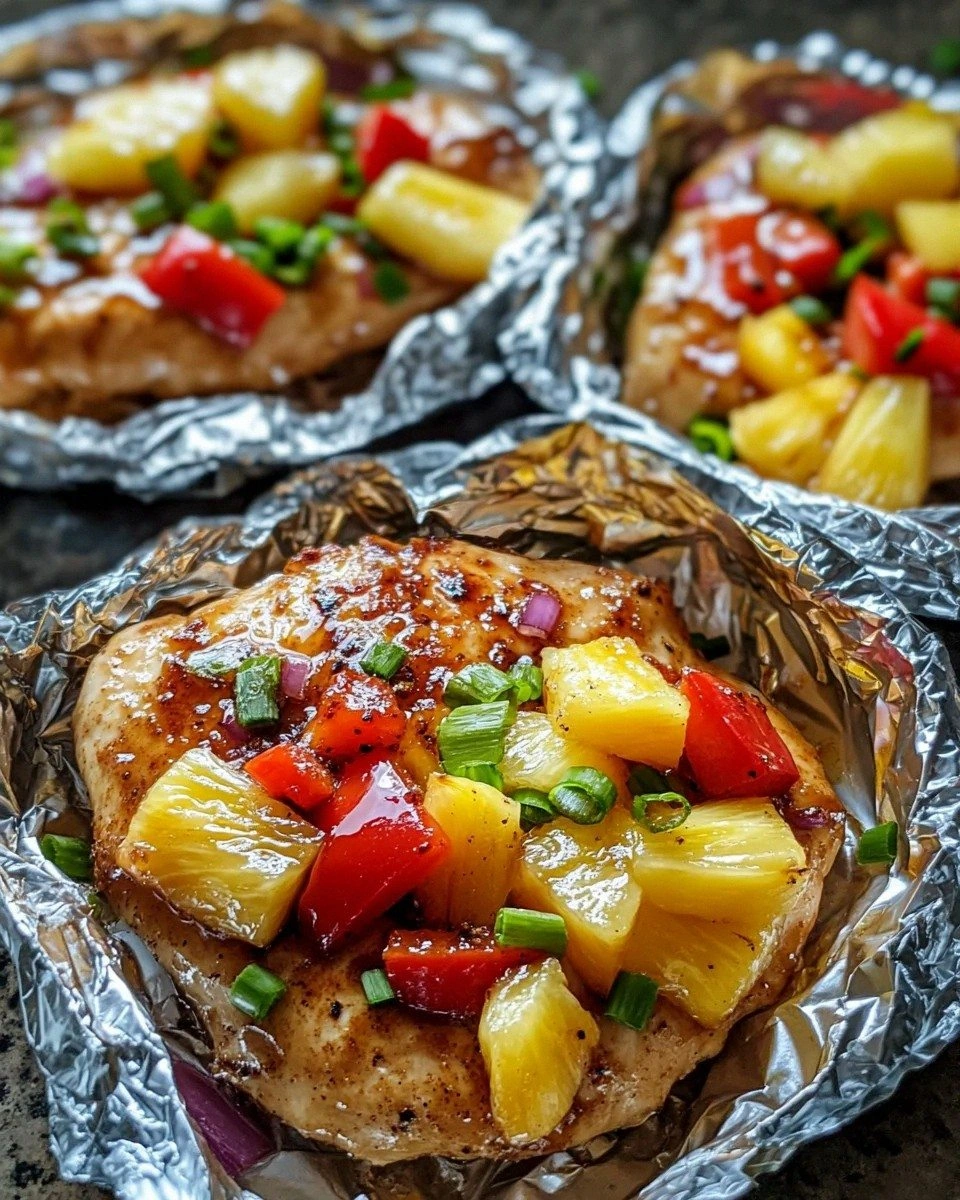
Picture this: the sweet-tart perfume of caramelized pineapple mingling with salty-sweet teriyaki glaze, all trapped inside a glossy foil packet that hisses like a tiny steam engine when you pierce it open. The chicken emerges so juicy it practically sighs, while the peppers keep a gentle snap and the onions turn into candy-soft ribbons. You get the smoky char from the oven’s heat, the sticky lacquer of sauce that coats every cube of fruit, and that irresistible contrast between savory and tropical that makes your brain short-circuit in the best way. I dare you to taste this and not go back for seconds—actually, I double-dog dare you, because I’ve seen self-proclaimed “small portion” friends hoover two packets without breathing.
Most recipes get foil packets completely wrong—they either drown everything in watery sauce or leave the meat dry as campfire kindling. This version uses the foil like a pressure sauna: the pineapple releases just enough juice to thin the teriyaki into a glossy lacquer, while the sealed top traps every molecule of flavor. No mushy veggies, no sad gray chicken, no puddle of liquid at the bottom. Just concentrated, candy-coated umami bombs that you can dump over rice, noodles, or eat straight off the cutting board while hovering in your slippers. I’ll be honest—I ate half the batch before anyone else got to try it, and I only felt mildly guilty because I told myself I was “quality-testing.”
Okay, ready for the game-changer? We’re going to quick-marinate the chicken right in the foil by massaging the teriyaki straight into the meat, layering the pineapple on top so the enzymes work their tenderizing magic, then sealing everything so tight it could survive a NASA launch. No extra bowls, no overnight waits, no fancy gadgets—just you, your hands, and a sheet of aluminum foil that turns into a personal flavor spaceship. Let me walk you through every single step—by the end, you'll wonder how you ever made it any other way.
What Makes This Version Stand Out
Velvet Chicken Guarantee: By using pineapple’s natural bromelain enzymes and a tight foil seal, the chicken becomes fork-tender without turning stringy. Most recipes overcook the meat while waiting for vegetables to catch up; here everything finishes in a dead heat.
Candy-Coating Magic: The teriyaki reduces inside the packet until it turns into a sticky glaze that lacquers each cube of pineapple like gourmet gummy candy. Open the foil too early and you’ll miss the transformation—patience is your secret ingredient.
One-Sheet Cleanup: Everything cooks in a single foil envelope—no pans, no grill baskets, no scrubbing caramelized sauce off baking trays. Crumple up the foil and you’re basically done with dishes.
Flash-Marinate Shortcut: Instead of waiting hours, you’ll massage the sauce directly into the chicken and let the trapped steam finish the job. The result tastes like overnight marinating without the foresight.
Color-Pop Veggies: Red and green bell peppers stay neon-bright because they’re essentially flash-steamed then kissed by the broiler. No sad army-green peppers floating in a stew.
Make-Ahead Hero: Assemble packets up to 24 hours ahead, park them on a tray in the fridge, then slide into the oven when guests walk in the door. Future you is already relaxed.
Alright, let’s break down exactly what goes into this masterpiece...
Inside the Ingredient List
The Flavor Base
Boneless, skinless chicken breasts are the blank canvas here, but they need a little love so they don’t taste like gym food. Slice them into 1-inch chunks to increase surface area—more edges mean more sticky teriyaki real estate. If you’re tempted to swap thighs, go ahead, but trim the fat or the glaze won’t cling. And please, please don’t use pre-cooked chicken; it turns into sawdust under the heat. Fresh is best, frozen is fine (thaw it fully so the marinade isn’t battling ice crystals).
Teriyaki sauce is the obvious star, yet not all bottles are created equal. Look for one where the first ingredient isn’t high-fructose corn syrup—your glaze will thank you. I keep a cheap brand for everyday and a craft brewery version (yes, that’s a thing) for guests. If you’re feeling saucy, whisk together ¼ cup soy, 2 Tbsp each mirin and brown sugar, a grated garlic clove, and a whisper of ginger; simmer three minutes and boom—DIY teriyaki that’ll make you feel like a culinary wizard.
The Texture Crew
Fresh pineapple—not canned—brings bright acidity and those tenderizing enzymes we keep raving about. Canned fruit is already softened and will dissolve into baby food under steam. Dice it into ½-inch cubes so you get juicy pops without overwhelming the chicken. Green bell pepper gives a grassy snap, red bell pepper adds candy sweetness, and together they look like Christmas morning. Slice them into thin ribbons so they cook in the same heartbeat as the chicken.
Red onion mellows into jammy crescents that practically melt while the edges char. If you’re an onion hater, try shallots for a subtler vibe, but don’t skip the allium entirely—it’s the aromatic backbone. A single small onion is plenty; nobody wants to bite into a slab that hijacks the whole forkful.
The Unexpected Star
Two cloves of garlic, micro-planed or smashed into oblivion, disappear into the sauce but leave behind a warm hum that blooms minutes after you swallow. Skip the jarred stuff; it tastes like sad plastic. A tablespoon of olive oil loosens the teriyaki so it can slip into every crevice, plus it prevents the chicken from welding to the foil. Think of it as the slip-n-slide of flavor.
The Final Flourish
Salt and pepper seem like afterthoughts, but they wake up every other flavor. Season the chicken directly before it meets the sauce; salt draws out moisture and helps the teriyaki cling. A few cracks of fresh pepper add a floral heat that balances the sugar. Go light—teriyaki brings sodium to the party already.
Everything’s prepped? Good. Let’s get into the real action...
The Method — Step by Step
- Preheat your oven to 425 °F (220 °C) with a rack dead center. High heat is non-negotiable—it flash-steams the packets then broils the tops for those crave-able caramelized edges. While it heats, tear off four 12-inch sheets of heavy-duty foil. If you only have regular foil, double up; nobody wants a volcanic leak dripping sticky teriyaki onto the oven floor. Lay them shiny-side down on the counter like silver placemats waiting for treasure.
- Pat the chicken breasts dry with paper towels; moisture is the enemy of browning. Dice into 1-inch cubes—think bite-size but not teeny, because they shrink slightly as they cook. Slide the cubes into a bowl and season with ½ teaspoon kosher salt and ¼ teaspoon freshly ground black pepper. Toss with your hands, lifting and separating so every surface gets a little love. This thirty-second spa treatment seasons the meat all the way through, not just the exterior.
- Pour the teriyaki sauce over the chicken like you’re drizzling liquid mahogany. Add minced garlic and olive oil, then channel your inner masseuse—knead the mixture for a full minute. The goal is to coat every nook so the sauce can cling during steaming. Let it sit while you slice the vegetables; even five minutes of contact amps up flavor. If you walk away to answer a text, no stress—this is casual marinating at its finest.
- Divide the chicken mixture evenly among the four foil sheets, mounding it in the center like a shiny brown iceberg. Scatter diced pineapple on top, letting the juice rain down; this natural sugar turbo-charges the glaze. Layer on red bell pepper, green bell pepper, and red onion in that order—colors matter when you later rip open the packets for the ‘gram. Keep everything in a compact pile so you can seal it tight; sprawling ingredients mean leaky seams.
- Bring the long sides of the foil together above the food and fold down twice, creasing firmly each time to create a tight seam. Roll up the short ends like you’re wrapping a giant Tootsie Roll; pinch so no steam can escape. You should end up with a neat silver brick that feels slightly puffy from trapped air—think of it as a miniature pressure cooker. If any sauce seeps out, re-crimp; a lost packet is a lost cause later.
- Place the packets seam-side up on a rimmed baking sheet—rimmed because Murphy’s Law loves sticky drips. Slide the sheet into the oven and bake for 20 minutes. Resist the urge to open early; the magic happens in the dark. At the 20-minute mark, switch the oven to broil on high for 3–4 minutes. This blasts the tops into caramelized perfection without drying the meat. You’ll hear a faint sizzle symphony—music to hungry ears.
- Remove the tray and let packets rest for 2 minutes. This pause lets the sauce thicken and the pineapple absorb its own sunshine. Transfer each packet to a plate, slit an X with a sharp knife, and fold back the foil like you’re unveiling a prize. The aroma that escapes is pure tropical vacation—smoke, sugar, soy, and that irresistible hiss of steam. Serve over steamed rice, cauliflower rice, or straight from the foil while standing at the counter in sock feet. Nobody will judge.
That's it—you did it. But hold on, I've got a few more tricks that'll take this to another level...
Insider Tricks for Flawless Results
The Temperature Rule Nobody Follows
Chicken breast hits peak juiciness at 160 °F, but because it keeps cooking in the hot foil, pull the packets when an instant-read thermometer plunged through the seam reads 155 °F. Carry-over heat nudges it the rest of the way while the sauce reduces. Ignore this and you’ll hit 170 °F, entering sawdust territory. A friend tried skipping this step once—let’s just say it didn’t end well, and her dog got more dinner than she did.
Why Your Nose Knows Best
When the scent shifts from raw garlic to nutty toasted heaven, the broiler phase is done—usually 3 minutes, never more than 4. Trust olfaction over blind timers; ovens vary like snowflakes. If you smell acrid garlic, you’ve crossed into bitter town and can’t go back. Stay near the kitchen during broil; this isn’t the moment to reorganize your spice drawer.
The 5-Minute Rest That Changes Everything
After opening, let the contents sit uncovered for 5 minutes. The sauce thickens, flavors marry, and the chicken reabsorbs some juices. I know it’s torture when the smell is slapping you in the face, but good things come to those who wait. Use the interval to set the table or pour yourself a cold drink—you’ve earned it.
Creative Twists and Variations
This recipe is a playground. Here are some of my favorite ways to switch things up:
Spicy Mango Tango
Swap pineapple for mango chunks and whisk 1 teaspoon sriracha into the teriyami. The mango melts into honey-like pockets while the heat sneaks up at the end. Top with fresh cilantro and toasted sesame seeds for a Thai street-food vibe. If you’ve ever struggled with boring chicken, you’re not alone—and I’ve got the fix.
Korean BBQ Remix
Use gochujang-spiked bulgogi sauce instead of teriyaki and add a handful of quickly pickled carrots to the packet after cooking. The color contrast is fireworks, and the tangy carrots cut through rich sauce like a zipline. Serve in lettuce cups for a low-carb, high-flavor handheld.
Island Breakfast Hack
Substitute cubed ham for half the chicken, crack an egg on top during the last 5 minutes of baking, and finish with a sprinkle of green onion. The egg poaches in the sauce and creates a breakfast-for-dinner situation that kids inhale. Future pacing: picture yourself pulling this out of the oven, the whole kitchen smelling like a tropical diner.
Teriyaki Shrimp Lite
Replace chicken with jumbo shrimp and cut bake time to 10 minutes. Shrimp exude their own briny juice that marries with teriyaki like they were born to tango. Add snap peas for crunch and serve over chilled soba noodles for a summer supper that doesn’t heat up the house.
Campfire Cones
Assemble everything inside a large waffle cone wrapped in foil, then nestle into campfire coals for 8–10 minutes. The cone soaks up sauce and becomes a crunchy edible bowl. Okay, ready for the game-changer? Drizzle with a whisper of condensed milk before serving—pure magic.
Storing and Bringing It Back to Life
Fridge Storage
Slide cooled contents into airtight glass containers and refrigerate up to 4 days. Glass prevents the sauce from staining plastic and won’t absorb garlic ghosts. Separate rice into its own container so it doesn’t become a soggy sponge. Reheat within 2 minutes in the microwave with a damp paper towel over the top to re-steam the chicken.
Freezer Friendly
Freeze unopened foil packets for up to 2 months. Wrap each one in a second layer of foil, label with a Sharpie, and stack like edible bricks. Bake from frozen at 400 °F for 35 minutes, then broil as directed. The pineapple’s enzymes keep the chicken surprisingly tender even after the deep freeze. If you’ve ever tasted freezer-burned stir-fry, you know why double-wrapping matters.
Best Reheating Method
Add a tiny splash of water before reheating—steam brings everything back to life. Microwave on 70 % power in 30-second bursts, stirring gently between zaps. Over-full power tightens proteins into rubber bands. For larger portions, warm covered in a skillet over medium with a tablespoon of water until glossy and hot, about 5 minutes.