Yesterday, at 3:17 p.m., I set out to make a quick batch of peanut brittle to photograph for this post. By 3:42 p.m. I was standing over the sink, shamelessly crunching shards straight off the sheet pan while my phone buzzed with texts from neighbours who had caught the caramel-vanilla cloud drifting down the street. One friend—who swore she was on a sugar detox—showed up with an empty Tupperware and puppy-dog eyes. I handed her half the batch just to get her out of my kitchen before I inhaled the rest. If that isn’t a testimonial, I don’t know what is.
Let’s be honest: most homemade peanut brittle lands somewhere between “edible concrete” and “dental-nightmare taffy.” Either it cements to your molars like driveway tar, or it’s so airy you bite straight through and stab your tongue on a rogue peanut. For years I thought that was the deal—you win some, you lose some, you keep a dentist on speed dial. Then my grandmother mailed me her 1952 church-cookbook pamphlet, the one with the spine cracked open to a page dotted with decades-old sugar freckles. Tucked inside was a note: “Stop stirring like a maniac, trust the smoke, and quit under-cooking the caramel.” That single piece of paper turned everything I thought I knew about brittle on its head.
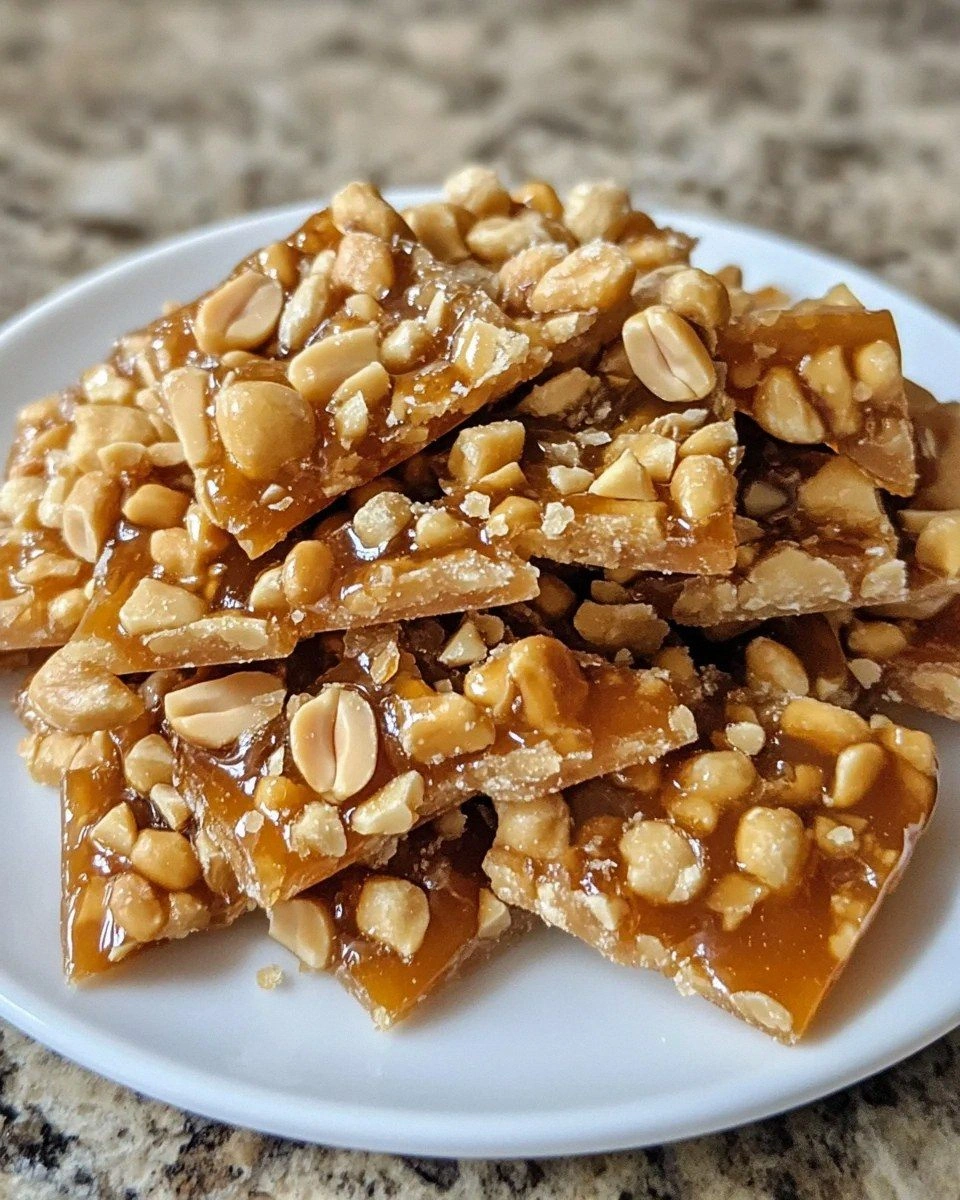
This version crackles like thin ice underfoot on a frozen lake, shatters into glittery amber shards, and melts on your tongue into a buttery, nut-toffee cloud. It tastes like the state-fair booth you can never find when you actually have cash. Best part? You don’t need a candy thermometer that beeps like a submarine sonar. You need a heavy pot, a wooden spoon that’s seen some life, and the courage to let sugar cook until it smells like toasted hazelnubs wearing caramel perfume. I dare you to taste it and not go back for seconds—actually, thirds—while it’s still warm enough to leave fingerprints in the pan.
Picture yourself pulling this out of the oven, the whole kitchen smelling like someone bottled autumn and spiked it with roasted peanuts. Imagine the crack as you snap a piece, the way the light catches those glossy nooks, the tiny air bubbles that tell you it’s going to dissolve the second it hits your mouth. Stay with me here—this is worth it. Let me walk you through every single step—by the end, you’ll wonder how you ever made it any other way.
What Makes This Version Stand Out
Buttery Snap: We cook the caramel just past hard-crack, so you get that glass-clear fracture without the jaw-breaking chew. It dissolves like whisper-thin toffee, leaving behind a film of brown-butter flavour that lingers longer than your favourite song chorus.
Deep Roast Flavour: Instead of tossing in raw peanuts, we flash-roast them in the pot first. The oils bloom, the skins blister, and the whole mixture smells like a baseball stadium in July—salt, smoke, and anticipation.
No Thermometer Drama: My colour-and-aroma method means you watch the bubbling sugar turn the shade of Grade B maple syrup and sniff for the nutty-smoke signal. That’s it. If you can make boxed mac and cheese without scorching it, you can master this.
One-Pot Wonder: Everything—sugar, nuts, butter, baking-soda fireworks—happens in the same heavy saucepan. Less mess equals more motivation to make a second batch tomorrow when the first mysteriously disappears.
Flex-Flavour Edge: You can infuse the hot sugar with a pinch of smoky paprika for heat, a sprig of rosemary for herbaceous mystery, or a spoonful of bourbon because, well, bourbon. Try that with supermarket brittle.
Make-Ahead Champion: Wrapped tight, it stays crisp for three weeks. Good luck keeping it around that long. I once hid a tin behind the lentils and my husband still sniffed it out like a truffle pig within 36 hours.
Crowd Reaction Guarantee: Bring a bag to the office and watch grown adults turn into polite piranhas. Someone will absolutely corner you for the recipe, and you’ll pretend it’s complicated while knowing it’s easier than folding laundry.
Alright, let’s break down exactly what goes into this masterpiece...
Inside the Ingredient List
The Flavor Base
Granulated sugar is the blank canvas, but we’re not stopping at sweet. We let it cook until the edges start smoking and the colour veers into mahogany territory. That controlled bitterness is what separates “meh” brittle from the kind that makes you close your eyes involuntarily. Don’t swap in brown sugar; the molasses drags moisture into the party and you’ll end up with sticky taffy by day two.
Light corn syrup buys us insurance against crystallisation. It’s like that friend who calms everyone down when the drama starts. If you’re philosophically opposed, you can use golden syrup, but expect a deeper, almost treacly note that will eclipse the peanut perfume. Honey is a no-go—its water content turns your snappy sheet into a bendy mess before the midnight hour.
The Texture Crew
Raw Spanish peanuts are my ride-or-die. Their petite size means more surface area per handful, plus the red skins add specks of campfire colour. Dry-roasted cocktail peanuts from a can work in a pinch, but rinse the dusty seasoning off first; nobody wants garlic-pepper brittle, trust me on this. If you can only find salted, omit the recipe’s pinch of flake salt and you’re balanced.
Butter isn’t just richness; it’s the secret flex that makes the caramel stretch before it shatters. Use the good European stuff with 83% fat if you’re feeling fancy—those extra milk solids toast into toffee notes that scream sophistication. Margarine will betray you with a waxy aftertaste and the texture of stale plastic. Just don’t.
The Unexpected Star
Baking soda is the fireworks finale. When you stir it in, the mixture foams like a science-fair volcano, trapping thousands of micro-bubbles that give brittle its signature feather-light crunch. Use fresh soda; if the can has been deodorising your fridge since last Thanksgiving, it’s lost puffing power. I date my box the day I open it, like a covert spy tracking intel.
The Final Flourish
A whisper of vanilla rounds the sharp caramel corners, but add it off-heat so the alcohol doesn’t flash off in a dramatic stove-top inferno. A pinch of flaky sea salt—think Maldon or Cornish—provides the crave-worthy contrast that keeps hands cycling back to the tin. Skip the salt and you’ll swear something is missing, even if you can’t name the absence.
Everything’s prepped? Good. Let’s get into the real action...
The Method — Step by Step
- Start with a dry, heavy-bottomed 3-quart saucepan—any moisture invites sugar to seize like a drama queen. Pour in 2 cups of granulated sugar and ½ cup light corn syrup, then use your fingers to mix gently until every crystal is coated. It should feel like damp sand at low tide. Set the pot over medium heat and resist the urge to stir; instead, grasp the handle and swirl the whole pan every 30 seconds so the sugar melts evenly. In about four minutes you’ll see the bottom layer liquefy into a clear amber puddle that smells faintly of marshmallow.
- Keep swirling and watching; within another three minutes large bubbles will form like lava in a cauldron. The colour will deepen to the shade of iced tea and the aroma will shift from sweet to almost boozy. This is the moment most recipes get wrong—they pull it too early and you get rock-candy jawbreakers. Let it go another 60 to 90 seconds until wisps of smoke curl up and the bubbles tighten. That sizzle when it hits the pan? Absolute perfection.
- Off heat, immediately drop in 3 tablespoons of butter and 1½ cups of Spanish peanuts. The mixture will hiss and clump like an angry cat; keep stirring with a wooden spoon until the butter disappears and the peanuts look glossy. Return the pot to low heat for exactly 2 minutes, stirring constantly. You’re roasting the nuts inside caramel, toasting both for a double-whammy of flavour. Your kitchen will smell like someone opened a praline shop next door.
- Grab a heatproof spatula and quickly stir in 1 teaspoon vanilla and 1¼ teaspoon flaky sea salt. The caramel will thin slightly and look like liquid amber. Now dust 1 teaspoon of baking soda over the surface and beat like you mean it. The whole mass will balloon up—keep stirring until no brown streaks remain. This next part? Pure magic.
- Immediately scrape the foamy mixture onto a silicone-lined rimmed sheet pan. Don’t scrape the last bit of dark caramel stuck to the bottom; it cooked hotter and tastes bitter. Tilt the pan so the brittle flows into an even layer about ¼-inch thick. If it refuses to spread, pop it back on the warm burner for 5 seconds to loosen. Work fast—like sunscreen on a toddler, it sets quicker than you expect.
- Let the sheet cool undisturbed for 30 minutes; the edges will start pulling away from the sides when it’s ready. If you live in a humid climate, prop a fan nearby to blow across the surface—moisture is brittle’s kryptonite. When the centre feels cool to the touch, lift the silicone mat and flex it gently; the whole sheet should crack like a frozen lake in April. Break into rustic shards with your hands or the back of a knife. Try not to eat every piece that resembles Australia.
- Store in an airtight tin, layered between parchment, for up to three weeks. Good luck with that. In my house the tin develops a mysterious leak that funnels pieces directly into my mouth at 11 p.m. while I pretend to look for tea.
That’s it—you did it. But hold on, I’ve got a few more tricks that’ll take this to another level...
Insider Tricks for Flawless Results
The Temperature Rule Nobody Follows
Professional candy makers swear by 300°F, but your stovetop is not a lab calorimeter. Instead, rely on colour: when the caramel hits the shade of an old penny and smells like toasted hazelnuts swimming in brown butter, you’re there. If you own an infrared thermometer, aim for 305–310°F, but trust your senses first and gadgets second. Under-cooking by even five degrees yields sticky taffy; over-shooting turns your treat into bitter carbon. Remember, residual heat will nudge it higher after you pull the pot off the burner.
Why Your Nose Knows Best
Close your eyes when the sugar starts smoking—yes, really. The aroma shifts from cotton-candy sweet to nutty, boozy, almost bourbon-like. That’s the Maillard reaction throwing a party. When you catch that scent, count to fifteen Mississippi, then add your butter. Miss the window and the caramel veers into acrid territory. A friend tried skipping this step once—let’s just say it didn’t end well and her trash can smelled like burnt marshmallows for a week.
The 5-Minute Rest That Changes Everything
After you pour the brittle, walk away for exactly five minutes. During this pause, the surface develops a skin so when you move the sheet it won’t ripple into thick and thin zones. If you absolutely must speed-cool, slide the pan onto a room-temp marble slab or a stack of two baking sheets; the insulation prevents thermal shock that can cause unwanted chewiness. Humidity is your enemy—if it’s raining, run the exhaust fan and maybe a dehumidifier in the next room.
Clean-Up Without Tears
Fill the sticky pot with water, add a squirt of dish soap, and simmer for five minutes. The sugar syrup magically dissolves, and you’ll swipe the sides clean with a sponge instead of chiselling like an archaeologist. For the sheet pan, soak the silicone mat in hot, soapy water while you snack; any stubborn bits lift off with a gentle bend. Do not, under any circumstance, toss the pot into cold water unless you fancy welding caramel onto stainless steel for eternity.
Creative Twists and Variations
This recipe is a playground. Here are some of my favorite ways to switch things up:
Smoky Chipotle Crunch
Swap ¼ teaspoon of the salt for ground chipotle powder. The gentle heat sneaks up after the sweet, like a friendly ghost tapping you on the shoulder. Add a tablespoon of crushed pepitas along with the peanuts for speckled colour. Fans of Mexican hot chocolate will recognise the smoky intrigue and reach for a cold glass of horchata.
Rosemary-Sea Salt Elegance
Tuck a 4-inch fresh rosemary sprig into the pot after the butter melts; remove just before pouring. The herb perfumes the caramel with piney notes that taste like winter holidays in Provence. Finish with a snowdrift of flaky salt so each bite crackles between savoury and sweet. Serve this at cocktail parties and watch people try to guess the “secret ingredient” until you smugly reveal it’s just a humble herb.
Bourbon Bacon Bourbon—Yes, Twice
Stir 1 tablespoon of good Kentucky straight bourbon in with the vanilla. While the brittle cools, sprinkle ½ cup of crumbled candied bacon over the surface and press gently so it adheres. The fat melts into the candy, creating pockets of smoky umami that make grown men weep into their beer. Fair warning: once you gift this, you’ll be asked to bring it every Christmas until you die.
White Chocolate-Dunked Bling
After the brittle cools, melt 4 ounces of high-quality white chocolate with 1 teaspoon of coconut oil. Dip one end of each shard, then shower with neon sprinkles or edible gold dust. Kids go feral for it, and bridal showers suddenly feel like Studio 54. Chill five minutes to set, then package in clear bags tied with ribbon for instant hostess gold stars.
Curry-Coconut Bombay Blast
Replace 2 tablespoons of the peanuts with unsweetened coconut flakes and add ½ teaspoon of mild curry powder when you stir in the butter. The spices toast in the fat, releasing turmeric perfume that mingles with caramel for a sweet-savoury journey. Pair with chai or an off-dry Riesling and prepare for your taste buds to buy a plane ticket.
Citrus-Pepper Zing
Micro-plane the zest of one orange into the vanilla and add ⅛ teaspoon of cracked pink peppercorns. The oils bloom in the heat, giving the candy an aromatic lift reminiscent of old-fashioned orange gumdrops. The peppercorns pop lightly under tooth pressure, adding gentle heat that blooms after you swallow. Perfect for people who claim they “don’t like dessert” yet mysteriously inhale the entire tin.
Storing and Bringing It Back to Life
Fridge Storage
Moisture is brittle’s nemesis, so never refrigerate unless you live in a rainforest and have no air-conditioning. If you must, wrap pieces in parchment, slide into a zip bag with a silica packet, and use within five days. The cold can make sugar weep; let the tin come to room temp before opening to prevent condensation droplets from dissolving your masterpiece.
Freezer Friendly
Believe it or not, brittle freezes beautifully. Layer shards between parchment in a rigid container, suck out excess air with a straw, and freeze up to three months. Thaw overnight on the counter, still wrapped, so ambient moisture forms on the paper instead of the candy. I stash a batch for summer ice-cream sundae emergencies; crushed brittle over vanilla bean gelato is the fastest route to hero status.
Best Reheating Method
You don’t reheat brittle—you revive it. If humidity turns it tacky, spread pieces on a sheet pan and warm in a 200°F oven for 8 minutes. The gentle heat drives off moisture without melting the sugar. Cool completely before re-packing. If you need to re-crush for topping, blitz briefly in a food processor while still warm; the candy fractures cleanly rather than turning to powder.