I still remember the day I swore off cheesecake forever. There I was, standing in my tiny Brooklyn kitchen, holding what looked like a deflated yellow frisbee that had somehow cracked open like the San Andreas Fault. My neighbor—born and raised in Queens—took one polite bite, patted my shoulder, and said, “Honey, stick to brownies.” I laughed it off, but inside I was mortified. New Yorkers don’t mess around when it comes to their cheesecake, and I had just committed a culinary felony.
Fast-forward three years, dozens of failed experiments, and one near-miss with a smoke alarm, and I finally cracked the code. The cheesecake that emerged from my oven that victorious afternoon was taller than a paperback, smooth as river stone, and so lusciously dense it could double as a pillow in a pinch. One bite and my same neighbor demanded the recipe for her daughter’s bridal shower, then asked if I could ship one to her cousin in Atlanta. That, my friends, is when you know you’ve arrived.
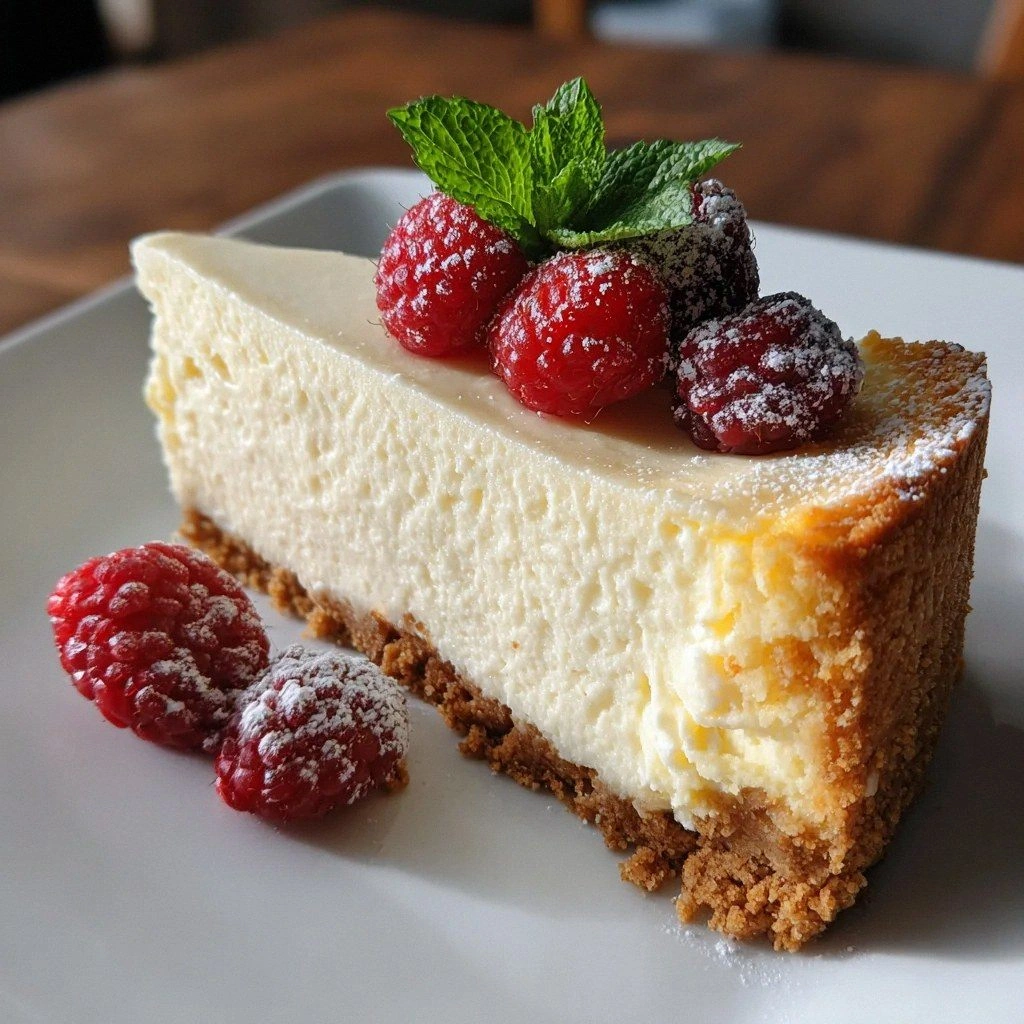
This isn’t some airy, gelatin-stabilized impostor that jiggles like a nervous Chihuahua. We’re talking the real deal: a satin-rich filling that holds its posture yet melts on your tongue, a crust that shatters like brittle toffee before giving way to buttery crumbs, and that signature brown kiss on top that screams confidence. It perfumes the house with vanilla and faint citrus, the scent curling through the hallway like it’s late for a Broadway audition.
Let me walk you through every single step—by the end, you’ll wonder how you ever made it any other way.
What Makes This Version Stand Out
Creamy Density: Most recipes whip too much air into the batter, giving you a soufflé that sinks. We beat on low, just enough to marry the ingredients, yielding that iconic New-York brick silhouette and a texture that slices like chilled mousse.
Triple-Cream Foundation: Full-fat brick cream cheese, a splash of sour cream for tang, and a spoon of heavy cream for glide. The trifecta keeps things lush without veering into cloying. Skip one and you’ll taste the void.
Springform Armor: We wrap the pan in triple-layer foil, then set it in a hot water bath. Steam gently coaxes the custard to set from edges to center, preventing the dreaded Sahara-style cracks.
Lemon Zest Whisper: A whisper—not shout—of fresh zest brightens the dairy parade, making each forkful feel almost refreshing. It’s stealth citrus, not lemon bar cosplay.
Overnight Chill Pact: You’ll be tempted to slice warm. Don’t. An eight-hour fridge nap lets proteins relax and moisture equalize, turning the texture from Play-Doh to velvet. Patience is a flavor.
Confidence Crust: We ditch the graham-cracker sand and go for crisp-crushed Biscoff cookies mixed with brown butter. The caramel notes tie directly into the toasty top, echoing crème brûlée vibes without the torch drama.
Crowd-Proof Consistency: I’ve baked this in sweltering July, drafty December, and my cousin’s finicky mountain-town oven. Same result every time—because we use weight measures, water bath, and a final 10-minute rest in the cooling oven. Science beats superstition.
Alright, let’s break down exactly what goes into this masterpiece.
Inside the Ingredient List
The Flavor Base
Cream cheese is the diva here—buy the bricks, not the tubs. Bricks contain less air, giving you denser structure and a clean, sharp tang that pre-sliced spreads can’t match. Pull it from the fridge an hour ahead so it blends silk-smooth; cold lumps are the enemy of even baking. Sour cream adds cultured depth, but if you’re stranded in a dairy desert, full-fat Greek yogurt works in a pinch—just expect a slightly grainier crumb. Vanilla extract should be the real stuff; imitation vanillin flattens the orchestra faster than a cheap kazoo.
The Texture Crew
Eggs set the custard; we use four whole plus one yolk for richness without rubbery bounce. Beat them in one at a time—think of introducing guests at a party rather than crowd-surfing. Heavy cream loosens the batter just enough to pour, preventing the dreaded air pockets that collapse into sinkholes. Cornstarch is our insurance policy, stabilizing without the metallic aftertaste of flour. A modest pinch of salt amplifies sweetness the way a frame highlights art.
The Unexpected Star
Biscoff cookies stomped into coarse rubble give deeper caramel flavor than graham, plus a whisper of cinnamon that plays nicely with vanilla. Brown the butter until the milk solids turn chestnut; the nutty aroma will make you question why you ever used plain melted butter. Press the mixture firmly into the base and halfway up the sides—think of building a sturdy wall, not a crumbly suggestion.
The Final Flourish
A whisper of lemon zest—about half a teaspoon—cuts through dairy like a squeeze of sunshine. Over-zest and you’re into furniture-polish territory, so microplane lightly. A dash of honey in the sour-cream topcoat lends glossy shine and a barely-there floral note that makes guests ask, “What is that?” without pinpointing it.
Everything’s prepped? Good. Let’s get into the real action...
The Method — Step by Step
- Heat your oven to 325 °F (160 °C) with a rack centered. Tear off three 18-inch sheets of heavy-duty foil, stack them, then wrap the outside of a 9-inch springform pan so water can’t sneak in like a determined cat. The triple layer sounds excessive—until you pull off a flawless bake and remember me fondly.
- Pulse 12 ounces Biscoff cookies into coarse rubble; you want pea-sized bits for crunch contrast. Melt 6 tablespoons unsalted butter over medium heat until the foam subsides and milk solids toast to hazelnut brown, about 4 minutes. Stir the brown butter into the crumbs until the texture resembles wet sand that clumps when squeezed.
- Tip the mixture into the prepared pan. Using the flat base of a measuring cup, press firmly and evenly across the bottom, then halfway up the sides—about 1 ¼ inches. Slide the pan into the preheated oven for 10 minutes, just until the crust smells like a speculoos candle and sets with a gentle tan. Remove and cool while you mix the filling.
- In a stand mixer fitted with the paddle, beat four 8-ounce bricks of room-temp cream cheese on low for 2 minutes until satiny. Scrape the bowl religiously; unmixed streaks are cheesecake varicose veins waiting to happen. Add 1 ¼ cups granulated sugar in a slow rain, still on low, until the mixture looks like glossy ice cream.
- Now watch this part closely: add ⅔ cup sour cream, ⅓ cup heavy cream, 2 teaspoons vanilla, 1 ½ tablespoons cornstarch, and ½ teaspoon kosher salt. Blend just until homogeneous—about 30 seconds. Over-mixing whips in air, leading to soufflé syndrome.
- Drop speed to stir. Add 4 large eggs, one at a time, letting each disappear before the next. Think of tucking them in, not scrambling. Finally, fold in 1 extra yolk for insurance-level richness and a whisper of lemon zest. The batter should ribbon off the paddle like slow lava.
- Bring a kettle of water to a gentle boil. Pour the filling into the cooled crust; tap the pan lightly on a towel-lined counter to pop sneaky bubbles. Set the springform in a roasting pan, place on the oven rack, then pour the hot water halfway up the foil wall—about 1 inch deep. Steam is your co-pilot here.
- Bake for 1 hour 15 minutes, until the outer 2 inches look set but the center wobbles like Jell-O when you jiggle the pan. If the top starts bronizing too quickly, tent loosely with foil. Trust the jiggle; it sets as it cools.
- Turn off the oven, crack the door with a wooden spoon, and let the cake luxuriate in the fading heat for 1 hour. This slow descent prevents the dreaded Grand Canyon fault line. Remove, lift the springform out, and peel away the foil. Cool to room temp on a rack, then chill at least 8 hours—overnight is better. Your future self will send thank-you notes.
That’s it—you did it. But hold on, I’ve got a few more tricks that’ll take this to another level.
Insider Tricks for Flawless Results
The Temperature Rule Nobody Follows
Start with room-temp dairy. Cold cream cheese refuses to emulsify, leaving tiny pebbles that bake into chalky craters. Forgot to plan? Microwave bricks—still wrapped—on 50% power for 20-second bursts, flipping between each. You want pliable, not melty fondue. Eggs warm quickly in a bowl of tap-hot water while you prep the crust. Consistency equals cohesion.
Why Your Nose Knows Best
When the kitchen suddenly smells like warm vanilla ice cream with a hint of toast, you’ve got 5 minutes left. Trust olfactory cues over the timer; ovens lie, nostrils don’t. If you smell roasted nuts, yank the foil tent on immediately to prevent a bitter top.
The 5-Minute Rest That Changes Everything
After the water bath, let the cake rest in the turned-off oven for exactly 60 minutes—not 30, not 90. Too short and the center collapses; too long and you’re basically slow-cooking, drying the edges. Set a phone alarm and walk away. Resist peeking; every open door drops temp by 25 °F.
Slice Like a Pro
Dip a chef’s knife in hot water, wipe dry, then cut in a single downward push—no sawing. Clean and reheat between cuts for photo-ready wedges that would make a pastry chef weep. Bonus: the hot blade glides through chilled fat like a lightsaber.
Creative Twists and Variations
This recipe is a playground. Here are some of my favorite ways to switch things up:
Blackberry Marble
Swirl ½ cup reduced blackberry purée through the batter with a skewer just before baking. The tart berries cut the richness like a squeeze of lime on fish tacos. Finish with fresh berries piled high and a dusting of powdered sugar for a purple galaxy vibe.
Espresso Buzz
Dissolve 2 teaspoons instant espresso into the heavy cream. The bitter coffee notes amplify caramelized depth, turning dessert into a sophisticated pick-me-up. Serve with chocolate-covered espresso beans for crunch and caffeine bravado.
Salted Maple Pumpkin
Swap lemon zest for ½ cup pumpkin purée and 2 tablespoons maple syrup, plus ½ teaspoon cinnamon and a pinch of nutmeg. Top with maple-sour-cream glaze and flaky salt. Thanksgiving in a forkful—no graham cracker required.
Peanut Butter Cup Crust
Replace Biscoff with 10 crushed chocolate-sandwich cookies plus ½ cup chopped peanut butter cups. The crust bakes into a candy-bar foundation that makes kids (and grown-up kids) lose their minds. Drizzle melted chocolate over the cooled cake for extra bling.
Coconut Dream
Sub ¼ cup cream of coconut for the heavy cream and fold in ½ cup toasted coconut flakes. The tropical perfume transports you to a beach chair somewhere far from subway delays. Garnish with lime zest curls for a piña-colada wink.
Mini Cheesecake Army
Divide batter among 24 foil-lined muffin cups set in a rimmed sheet pan; pour ½ inch hot water into the pan and bake 18–20 minutes. Perfect for bake sales or portion-controlled sanity. Top each with a raspberry so they look like red berets standing at attention.
Storing and Bringing It Back to Life
Fridge Storage
Cover tightly with plastic wrap pressed against the surface to prevent the cake from absorbing fridge funk. It keeps 5 days at peak flavor, though I dare you to make it last that long. Keep it on the top shelf where temps are coldest and most stable.
Freezer Friendly
Chill the cake overnight, then unmold and wrap in plastic plus foil. Freeze up to 2 months. Thaw 24 hours in the fridge before serving; texture remains nearly identical to fresh. Slice before freezing for grab-and-go wedges when midnight cravings strike.
Best Reheating Method
Cheesecake shines cold, but if you prefer a slightly yielding center, let a slice sit at room temp 15 minutes. For a just-baked sensation, microwave on 30% power for 8 seconds—no more or you’ll get lava edges. Add a tiny splash of water on the plate; the steam revives surface gloss like a spa day.