I was staring at a ruined pot of pasta that had turned into a thick, clumpy mess the night before. My roommate had dared me to make an “ultimate” fettuccine alfredo, and I had no choice but to rise to the challenge. The kitchen smelled like burnt butter and despair, but the promise of creamy, silky noodles was a siren call I couldn’t ignore. I pulled the fettuccine from the pantry, measured out the cream, and the moment the butter hit the pan, a faint hiss announced that something good was about to happen. That single sound—sizzle, crackle, pop—told me I was on the right track. It’s in those moments, when you’re juggling a pot of sauce and a pan of pasta, that the line between disaster and triumph is razor‑thin. And trust me, this version of fettuccine alfredo will make that line disappear, leaving you with a dish that feels like a warm hug on a cold night. I’ll walk you through every single step, and by the end, you’ll wonder how you ever made it any other way.
What Makes This Version Stand Out
- Richness: The sauce is a balanced blend of cream, butter, and parmesan that coats the pasta like velvet, without drowning it in dairy.
- Texture: The fettuccine is cooked al dente, providing a subtle chew that contrasts with the silky sauce.
- Simplicity: With only seven core ingredients, the recipe feels approachable yet indulgent.
- Flavor Depth: A touch of garlic and a splash of lemon zest unlock layers of aroma that elevate the dish.
- Crowd‑pleaser: Even the pickiest eater will be begging for seconds, as the sauce’s buttery richness is universally appealing.
- Ingredient Quality: Using real parmesan and high‑fat cream makes all the difference between “good” and “to die for.”
- Make‑ahead Friendly: The sauce can be prepped a day in advance, and the pasta is best added just before serving.
- Versatility: Add chicken, shrimp, or mushrooms to transform it into a complete meal.
Alright, let’s break down exactly what goes into this masterpiece…
Inside the Ingredient List
The Flavor Base
Heavy cream is the backbone of this sauce. Its high fat content creates a luscious mouthfeel that carries the parmesan’s sharpness. If you’re watching calories, you can replace it with half-and-half, but the sauce will lose some of its silkiness. A pinch of salt and a dash of freshly ground black pepper balance the richness without overpowering the other flavors.
The Texture Crew
Unsalted butter is the secret weapon that gives the sauce its buttery sheen and depth. Use a good quality butter with a high butterfat percentage (80% or above) for the best results. When melted, it should create a glossy surface that glistens like a calm lake. If you’re in a hurry, a quick stir of the butter and cream will set the base in a matter of minutes.
The Unexpected Star
Freshly grated parmesan is the star of the show. The fine grating ensures it melts quickly, creating a smooth sauce that clings to every noodle. If you only have pre‑shredded parmesan, you’ll notice a slightly gritty texture. The cheese’s natural saltiness also helps to elevate the other flavors, so don’t skip it.
The Final Flourish
A squeeze of lemon juice and a handful of chopped parsley add brightness and a hint of green that cuts through the richness. The lemon’s acidity balances the cream, while parsley introduces a fresh, herbaceous note. If you’re feeling adventurous, a pinch of cayenne pepper will give a subtle kick that surprises the palate.
Everything’s prepped? Good. Let’s get into the real action…
The Method — Step by Step
- Bring a large pot of salted water to a rolling boil. The salt should taste like the sea; this is the first step to ensuring the pasta flavors well. Add the fettuccine and cook according to the package instructions, usually 8–10 minutes, until al dente. Stir occasionally to keep strands separated.
- While the pasta cooks, melt the butter in a large skillet over medium heat. Watch for the butter to foam and turn a light golden brown—this is when the milk solids are caramelizing and the flavor deepens. Don’t let it burn; a burnt butter will ruin the sauce.
- Add the minced garlic to the butter and sauté for 30 seconds until fragrant. The garlic should release its oils without turning dark. This quick sauté ensures the garlic’s sharpness is mellowed and integrated into the base.
- Pour in the heavy cream, reduce the heat to low, and stir continuously. Let the mixture come to a gentle simmer—no rolling boil—so it doesn’t separate. This slow simmer allows the butter and cream to meld into a silky emulsion.
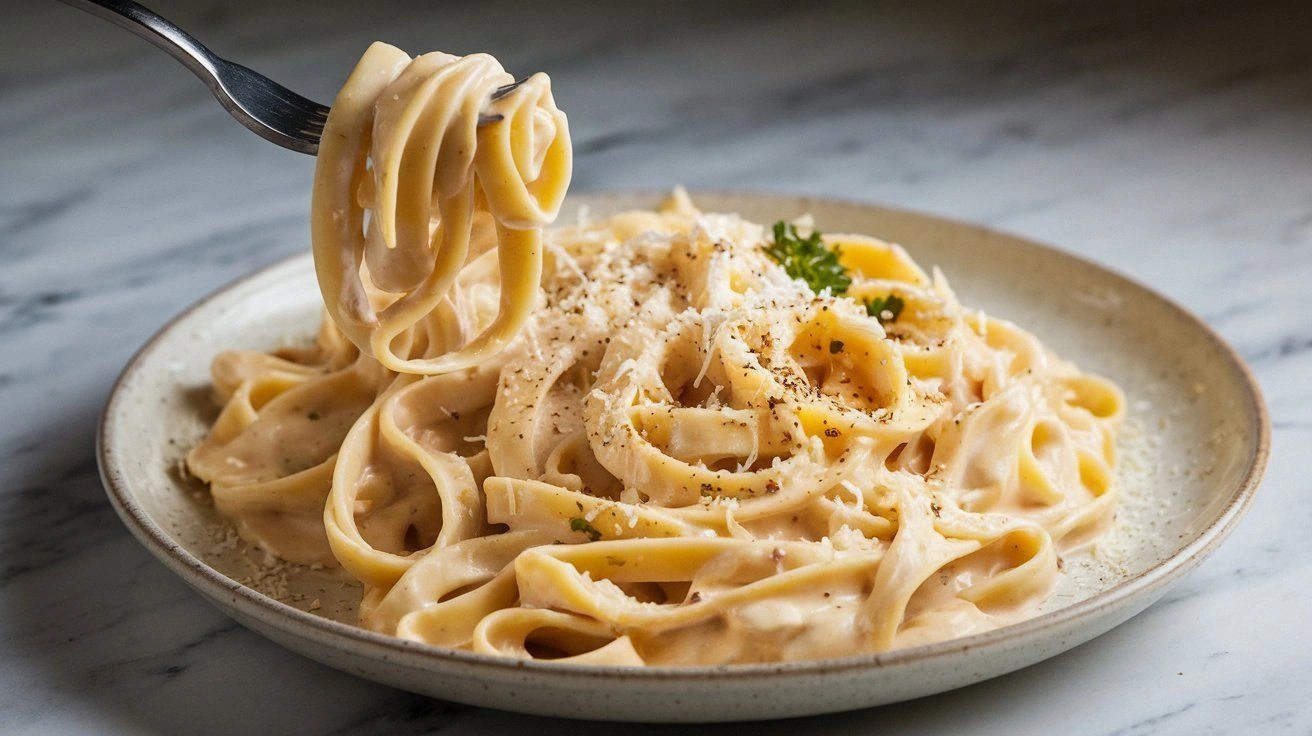
- Gradually whisk in the grated parmesan, a handful at a time. The cheese will melt in small bursts, creating a glossy sauce that coats the pasta. If the sauce thickens too much, add a splash of reserved pasta water to reach the desired consistency.
- Season with salt and pepper to taste. A pinch of salt is enough to bring out the richness, while pepper adds a subtle heat that balances the creaminess.
- Drain the pasta, reserving a cup of pasta water. Toss the noodles in the sauce, adding a bit of pasta water if the sauce feels too thick. The pasta should be coated like a velvet blanket, with each strand glistening.
- Finish with a squeeze of lemon juice and a sprinkle of parsley. The lemon’s bright acidity cuts through the fat, while parsley adds a fresh, herbal note that lifts the dish. Plate immediately, and serve with extra parmesan on the side.
That’s it — you did it. But hold on, I’ve got a few more tricks that will take this to another level…
Insider Tricks for Flawless Results
The Temperature Rule Nobody Follows
Many people think that a higher heat will cook pasta faster, but that’s a myth. Cooking the pasta on a lower, steady boil keeps the strands from sticking together and ensures a perfect al dente bite. Keep the heat moderate after adding the pasta; if the water starts to bubble too aggressively, lower the flame slightly.
Why Your Nose Knows Best
Smell the sauce as it simmers. A nutty, buttery aroma signals that the butter is fully caramelized. If the scent is bland, give it a minute longer; the butter’s flavor compounds need time to develop. Trust your nose, it’s the most reliable guide to flavor depth.
The 5‑Minute Rest That Changes Everything
After tossing the pasta with the sauce, let it rest on the stove for 5 minutes with the heat off. This rest period allows the noodles to absorb the sauce evenly, creating a cohesive, silky coating. The rest also lets the flavors meld, so the dish tastes more harmonious.
The Secret Ingredient Swap
If you’re craving a different flavor profile, swap the heavy cream for half‑and‑half and add a tablespoon of cream cheese. The cream cheese adds thickness and tang, while the half‑and‑half keeps the sauce lighter. This combo is perfect for a low‑fat version that still feels indulgent.
The Classic Touch of Lemon
A squeeze of lemon at the end brightens the dish and counteracts the richness. The acidity also helps to keep the parmesan from clumping. If you don’t have fresh lemons, a splash of white wine vinegar works as an excellent substitute.
Creative Twists and Variations
This recipe is a playground. Here are some of my favorite ways to switch things up:
Garlic Parmesan Chicken
Add sliced chicken breast to the sauce before tossing the pasta. The chicken absorbs the creamy sauce and adds protein, turning the dish into a hearty entrée.
Shrimp Scampi Alfredo
Sauté shrimp in garlic butter, then combine with the sauce. The shrimp’s sweet, briny flavor pairs beautifully with the buttery sauce.
Mushroom Medley Alfredo
Sauté sliced mushrooms in the butter before adding the cream. Their earthy tones deepen the sauce’s flavor profile and add a satisfying bite.
Spinach and Ricotta Fusion
Stir in fresh spinach and dollops of ricotta cheese for a lighter, dairy‑rich version that still feels indulgent.
Spicy Pepper Alfredo
Add a pinch of red pepper flakes or a dash of hot sauce to give the sauce a subtle kick that contrasts with the creaminess.
Vegan Alfredo with Cashews
Blend soaked cashews with plant‑based milk to create a creamy sauce. Use nutritional yeast for a cheesy flavor and keep the dish entirely dairy‑free.
Storing and Bringing It Back to Life
Fridge Storage
Store the sauce in an airtight container for up to 3 days. Reheat gently over low heat, stirring constantly, until warmed through. Adding a splash of milk or cream during reheating restores the sauce’s silky texture.
Freezer Friendly
Freeze the sauce in a freezer‑safe container for up to 2 weeks. Thaw overnight in the refrigerator, then reheat slowly, whisking in a little water or milk to achieve the original consistency.
Best Reheating Method
When reheating, bring the sauce to a gentle simmer and whisk in a tablespoon of cold water or milk. The added liquid helps prevent separation and keeps the sauce smooth and glossy.