It was a stormy Saturday night, the kind of evening that makes you want to pull out every comfort food you’ve ever dreamed of. I was standing in my kitchen, staring at a pot of boiling water, and suddenly a thought popped into my head: “What if I could make spaghetti that feels like a midnight thriller?” That spark turned into a full-blown culinary dare. I grabbed a bag of spaghetti, a pound of ground beef, a pound of pork, and a handful of secret ingredients that would make the dish scream spooky.
Picture this: the kitchen lights flicker, a single bulb hangs overhead like a lantern in a graveyard. The scent of garlic and tomato sauce drifts through the air, mingling with the metallic tang of fresh herbs. The sound of the sauce bubbling is like distant thunder rolling over a moonlit field. When you take that first bite, the pasta is coated in a velvety tomato glaze that clings like cobwebs, while the meatballs burst with a juicy, savory explosion that sends shivers down your spine. If you’ve ever eaten a bland plate of pasta, this is a game-changer that will make you question everything you thought you knew about comfort food.
I’ve tried countless spaghetti recipes that promised “extra flavor” but delivered nothing more than a bland, overcooked mess. This version, however, is hands down the best you’ll ever make at home. The combination of beef and pork gives the meatballs a deep, rich flavor that’s impossible to replicate with a single type of meat. The sauce, simmered for hours, develops a depth that’s both sweet and acidic, like a midnight whisper. The final touch—fresh basil leaves and grated parmesan—creates a bright, aromatic contrast that feels like a burst of fresh air after a long night. I dare you to taste this and not go back for seconds.
If you’re skeptical, let me walk you through every single step. By the end, you’ll wonder how you ever made it any other way. Picture yourself pulling this out of the oven, the whole kitchen smelling incredible, and a crowd of friends gathering around the table, eyes wide with anticipation. This is not just a meal; it’s an experience that will linger in your memory long after the last bite.
What Makes This Version Stand Out
- Flavor Depth: The slow-simmered tomato base unlocks a complex profile that balances sweetness, acidity, and umami. Every spoonful feels like a journey through a forest of herbs and spices. The result is a sauce that coats the pasta like velvet, leaving a lingering, savory aftertaste.
- Meatball Texture: Combining beef and pork creates a juicy, tender center with a slightly firmer exterior that shatters like thin ice when bitten. The breadcrumb and parmesan mixture adds a subtle crunch that breaks up the richness without overwhelming the dish.
- Ingredient Quality: Fresh, high-quality ingredients are the backbone of this recipe. Using a mix of ground meats and freshly grated cheeses elevates the dish beyond ordinary spaghetti.
- Make-Ahead Potential: The sauce and meatballs can be prepared a day ahead, allowing the flavors to meld. This convenience makes it perfect for a last-minute dinner party or a busy workweek.
- Visual Appeal: The bright green basil, the golden parmesan topping, and the deep red sauce create a feast for the eyes. It’s a dish that looks as good as it tastes, which is essential for those who love to impress.
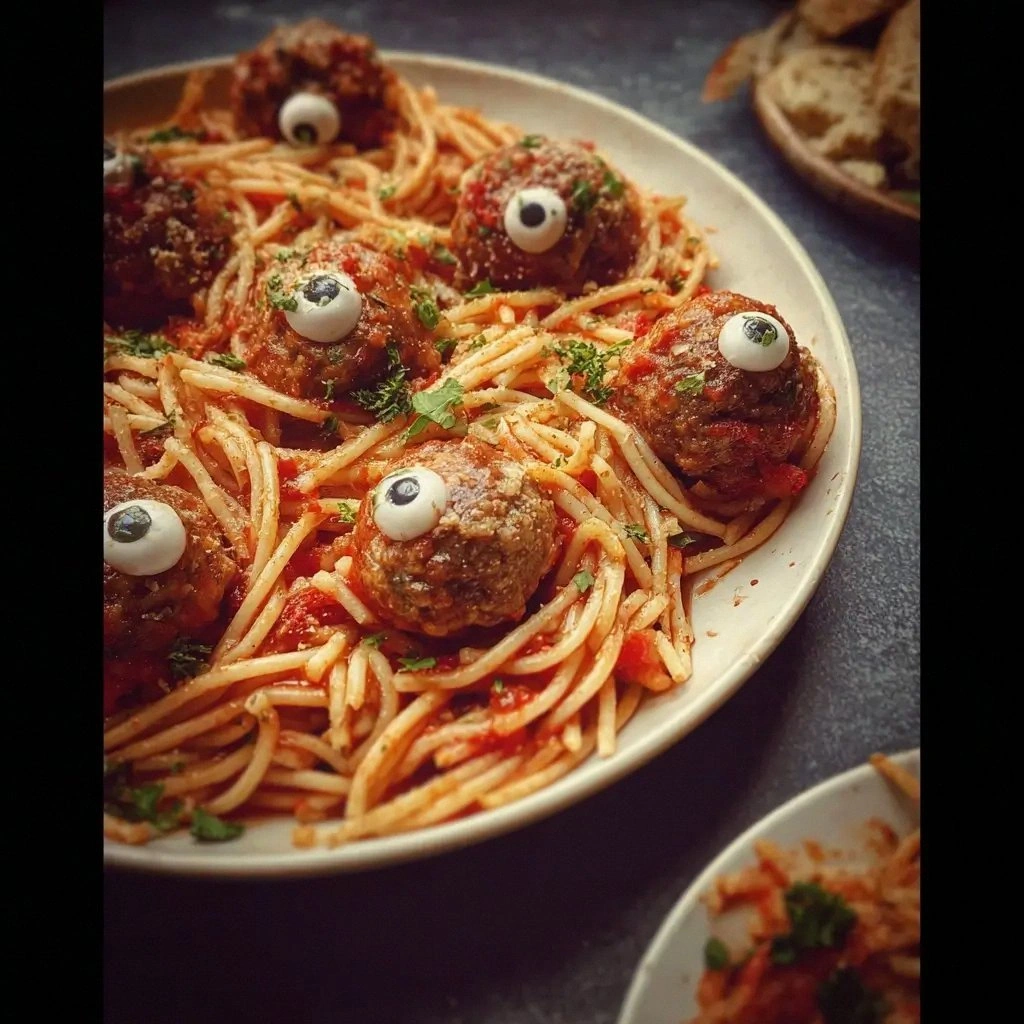
- Crowd Reaction: Friends and family will rave about the “spooky” presentation—especially the eyeball-shaped meatballs—making it a conversation starter at any gathering.
- Texture Contrast: The crispy edges of the meatballs contrast beautifully with the silky sauce and al dente spaghetti, creating a satisfying bite that keeps you coming back for more.
- Versatility: This recipe can be easily adapted for dietary preferences, such as using turkey instead of beef or adding a splash of red wine to the sauce for a deeper flavor.
Alright, let's break down exactly what goes into this masterpiece…
Inside the Ingredient List
The Flavor Base
Crushed Tomatoes (28 oz) are the foundation of our sauce. They provide the acidic backbone that balances the richness of the meatballs. Skipping them would leave the sauce flat and unremarkable. For a smoother texture, you can blend the tomatoes before adding them to the pot.
Tomato Sauce (1 cup) adds depth and thickness, turning a simple tomato broth into a hearty, glossy coating. If you prefer a thinner sauce, reduce the amount slightly, but the sauce should still cling to the pasta like a second skin.
Tomato Paste (2 tbsp) intensifies the tomato flavor and gives the sauce a velvety body. It’s a secret weapon that most home cooks overlook. If you’re sensitive to acidity, you can add a pinch of sugar to mellow the tartness.
Olive Oil (2 tbsp) is the fat that carries the aromatics and prevents the sauce from sticking to the pot. Use a good quality extra-virgin oil for maximum flavor. If you’re watching calories, a light olive oil still works, but the taste will be slightly muted.
The Texture Crew
Ground Beef (1 lb) provides the robust, earthy base for the meatballs. It’s essential for that classic meaty flavor. If you prefer leaner meat, use a mix of ground turkey and pork for a lighter bite.
Ground Pork (1 lb) adds moisture and a subtle sweetness that balances the beef’s intensity. The pork’s fat content keeps the meatballs from drying out during baking. If you’re avoiding pork, substitute with extra beef or a plant-based meat alternative.
Breadcrumbs (1 cup) help bind the meat mixture and give the meatballs a tender interior. For a gluten-free option, use crushed rice crackers or a gluten-free breadcrumb blend. If you like a crunchier texture, toast the breadcrumbs lightly before mixing.
Eggs (2) act as a natural binder, keeping the meatballs cohesive. They also add richness and a silky mouthfeel. If you’re vegan, use a flaxseed or chia seed “egg” to achieve a similar effect.
Parmesan Cheese (0.25 cup) introduces a nutty, salty note that enhances the meatballs’ flavor profile. It also contributes to a slightly crisp exterior when baked. If you’re lactose intolerant, substitute with a vegan parmesan alternative.
The Unexpected Star
Fresh Basil (0.25 cup) provides an aromatic lift that cuts through the richness of the meatballs and sauce. The basil leaves should be chopped just before serving to preserve their bright flavor. If basil is out of season, dried basil works, but fresh is always superior.
Red Pepper Flakes (0.5 tsp) add a subtle heat that awakens the palate. The spice level can be adjusted to your preference—more for a fiery kick or less for a milder taste. If you’re sensitive to spice, skip this ingredient entirely.
Oregano (1 tsp) brings an earthy, slightly bitter note that deepens the sauce’s complexity. Dried oregano is fine, but fresh leaves will give a brighter flavor. Use it sparingly; too much can overpower the dish.
Garlic (3 cloves, minced) is the aromatic backbone that infuses the sauce and meatballs with a savory punch. Garlic should be minced finely so it distributes evenly. For a milder garlic flavor, sauté the garlic until just golden before adding the tomatoes.
Onion (1 medium, finely chopped) adds sweetness and depth to the sauce. The onion should be sautéed until translucent before adding the tomatoes, ensuring its sugars caramelize slightly. If you’re avoiding onions, consider using a small amount of leeks.
The Final Flourish
Salt (1 tsp) is essential for bringing out all the flavors in the dish. Taste the sauce before adding more; too much salt can make the dish taste flat. If you’re on a low-sodium diet, reduce the amount to 0.5 tsp.
Black Pepper (0.5 tsp) adds a subtle warmth that complements the tomato’s acidity. Freshly ground pepper tastes best; pre-ground can become stale quickly. Adjust the amount to your heat preference.
Fresh Parsley (1 tbsp, chopped) adds a fresh, herbaceous finish that brightens the dish. It also adds a pop of green color that makes the plate look more vibrant. If parsley is not available, mint or cilantro can be used as a substitute.
Parmesan for Topping (0.25 cup) gives the final dish a crunchy, savory crust when sprinkled on top before serving. It also adds a subtle umami note that ties all the flavors together. If you’re vegan, use a nutritional yeast blend for a similar cheesy flavor.
Everything's prepped? Good. Let's get into the real action…
The Method — Step by Step
- Bring a large pot of salted water to a rolling boil. Add the spaghetti and cook until al dente, about 9-10 minutes. Drain and toss with a splash of olive oil to prevent sticking. Let it sit aside while you prepare the meatballs.
- In a large bowl, combine the ground beef, ground pork, breadcrumbs, parmesan, eggs, minced garlic, chopped onion, oregano, basil, red pepper flakes, salt, and black pepper. Mix gently but thoroughly; overworking can make the meatballs tough. Shape the mixture into 1.5-inch balls, leaving a small indentation in the center for the sauce to cling.
- Heat 2 tbsp of olive oil in a large skillet over medium-high heat. Add the meatballs in batches, searing each side until golden brown, about 3-4 minutes per side. The goal is a crisp crust that locks in juices. Once browned, transfer the meatballs to a baking sheet lined with parchment paper.
- Preheat the oven to 375°F (190°C). Bake the meatballs for 15-18 minutes, or until they reach an internal temperature of 160°F (71°C). The baking step ensures a consistent texture and eliminates any raw meat smell.
- While the meatballs bake, heat a large saucepan over medium heat. Add the olive oil, then sauté the minced garlic and chopped onion until fragrant and translucent, about 3 minutes. The aromatics form the base of the sauce, so don’t rush this step.
- Stir in the crushed tomatoes, tomato sauce, and tomato paste. Bring the mixture to a gentle simmer, then reduce the heat to low. Let it cook uncovered for 20 minutes, stirring occasionally. This slow simmer allows the flavors to meld into a rich, velvety sauce.
- Add the baked meatballs to the sauce, gently nudging them to coat. Simmer for an additional 10 minutes, allowing the meatballs to absorb the sauce’s depth. The sauce should thicken slightly, becoming glossy and clingy.
- In a large serving bowl, toss the cooked spaghetti with the meatball sauce, ensuring each strand is coated. Sprinkle fresh basil, parsley, and grated parmesan on top. The fresh herbs add a bright, aromatic finish that lifts the dish.
- Serve immediately, accompanied by a side of garlic bread or a crisp green salad. The contrast of the warm, hearty pasta with a cool, fresh salad balances the dish perfectly. The aroma of fresh basil and parmesan will draw everyone to the table.
- Enjoy the spooky spectacle of the eyeball-shaped meatballs and the comforting embrace of the tomato sauce. If you’re feeling adventurous, drizzle a little red wine reduction over the top for an extra layer of sophistication. Remember, the key to this dish is patience—every step matters.
That's it — you did it. But hold on, I've got a few more tricks that'll take this to another level…
Insider Tricks for Flawless Results
The Temperature Rule Nobody Follows
Most people bake meatballs at 400°F, but that can dry them out. Lowering the temperature to 375°F allows the meat to cook evenly while keeping the exterior crisp. I’ve found that the lower heat also lets the flavors of the herbs seep into the meat, creating a more cohesive taste.
Why Your Nose Knows Best
Before you add salt, give the sauce a quick sniff. A slightly acidic aroma indicates that the tomatoes have balanced well. If it smells too sharp, add a pinch of sugar or a splash of milk to mellow the acidity. Trust your nose; it’s the best judge of flavor.
The 5-Minute Rest That Changes Everything
After baking the meatballs, let them rest for five minutes on a paper towel. This resting period allows the juices to redistribute, preventing them from spilling out when you cut into them. The result is a meatball that stays moist and flavorful.
The Secret of the Basil
Fresh basil should be added at the very end of cooking. If you add it too early, the basil will wilt and lose its bright flavor. Tossing it in right before serving preserves its aroma and gives the dish a fresh lift.
The Sauce’s Final Touch
Just before serving, stir in a tablespoon of heavy cream or a dollop of mascarpone. The cream adds a silky richness that balances the acidity of the tomatoes. If you’re avoiding dairy, a splash of coconut milk works as a subtle alternative.
Creative Twists and Variations
This recipe is a playground. Here are some of my favorite ways to switch things up:
Spicy Cajun Meatballs
Add a tablespoon of Cajun seasoning to the meat mixture and a splash of hot sauce to the sauce. The smoky heat pairs beautifully with the tomato base, creating a dish that feels like a midnight adventure.
Mushroom Medley Sauce
Sauté sliced mushrooms with the onions before adding the tomatoes. The earthy flavor of the mushrooms deepens the sauce’s complexity and adds a subtle umami note.
Cheesy Baked Version
Top the meatballs with shredded mozzarella before baking. The melted cheese creates a gooey, golden crust that adds a decadent layer of flavor.
Vegan Meatballs
Replace the ground meats with a blend of lentils, finely chopped walnuts, and crumbled tempeh. Use nutritional yeast for the parmesan flavor and a flaxseed “egg” to bind the mixture. The result is a hearty, plant-based alternative that still delivers the spooky aesthetic.
Pesto-Infused Sauce
Stir in a handful of basil pesto into the tomato sauce just before serving. The pesto adds a fresh, herbal burst that brightens the dish and gives it a new dimension.
Garlic Parmesan Crusted Meatballs
Coat the meatballs in a mixture of grated parmesan and minced garlic before baking. The crust adds a crunchy, savory layer that contrasts with the soft interior.
Storing and Bringing It Back to Life
Fridge Storage
Cool the cooked spaghetti and sauce to room temperature before placing them in an airtight container. Store in the refrigerator for up to 3 days. The sauce will thicken slightly, so stir in a splash of water or broth before reheating.
Freezer Friendly
Separate the meatballs from the sauce before freezing. Place the meatballs in a single layer on a parchment-lined tray, freeze until solid, then transfer to a freezer bag. The sauce can be frozen in portions; reheat on the stove with a splash of water to loosen it.
Best Reheating Method
Reheat the sauce on low heat, stirring frequently. Add a teaspoon of olive oil or a splash of cream to restore its silky texture. If reheating the pasta, toss it in a pan with a little butter and fresh herbs to revive its flavor.